The Right Handwriting Tool for the Job!

writing tools 2

As with learning any new skill the right tool at the right time can make a real difference to the whole learning experience as well as the outcome. Learning to handwrite is no different.

Young children due to their gross and fine motor skills ability require chunky shafted tools so that they can grip them effectively. This means they have a greater control over the tool and can achieve a more satisfactory outcome. If they are using a tool that is too thin they will find gripping it difficult and have to keep changing their grip. They will have less control of the tool making the experience disappointing at best and discouraging at worst.

To help young children to store patterns and letter shapes formation into their motor memory it is important that the tools used provide a resistance rather than one that flows effortlessly over the writing/drawing surface. The greater the resistance the more the body can neurologically acknowledge (feel) the movement and help to send appropriate information to the brain.

Some of the best tools for young children to begin learning to draw patterns, shapes and correctly write letters:

  • Chalk on boards, walls or paths
  • Flip chart pens or large felt tips on course paper such as sugar paper
  • Using appropriately sized paint brushes on course paper or surfaces
  • Finger painting or finger drawing in sand, paint or cornflour mix
  • Finger tracing and then trying to draw the pattern, shape or letter straight afterwards.
  • Try chalking the shape or letter onto a blackboard and have the child use a damp sponge to wipe it off again (make sure the child starts in the correct place and moves correctly around the shape or letter to the correct finish point).
  • Appropriately sized crayons and pencils on course paper or card (non-shiny side of cereal boxes and corrugated card can be good fun and different to use).

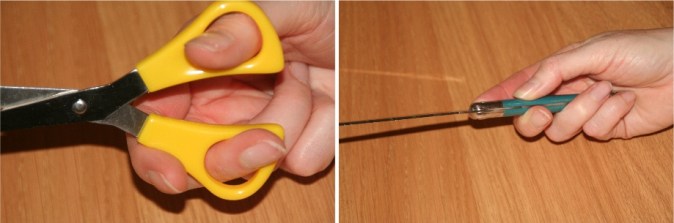
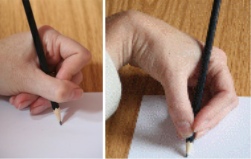
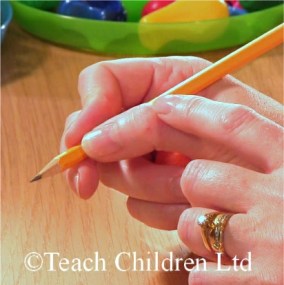
As children begin a more formal approach to learning to form their letters correctly then appropriately sized and lead grade pencils are the best tool for the job. Pencil come in all widths, lengths and shapes. The key is to find the style of pencil which best suits the child and their stage of pencil grip development. Remember one size doesn’t fit all!

When a child has learnt to join their letters and has a good and consistent letter size and places all their letters on the writing line correctly in relation to each other, then it maybe they are ready to be moved to pen. It is important before moving t child to pen that they are writing with speed (appropriate for their age) and fluidity (comfortable writing all the letters of the alphabet lower and upper case correctly). A child whose handwriting is slow and laboured may need additional support and time before being moved on to pen.

Week 5 of Our 5 Week Handwriting Lesson Program

Week 5 Handwriting 2

The fifth week of our handwriting program is ready for you to download. Today it introduces the ‘Hooks, Loops & Lines Letters’.

The free weekly set of worksheets can be downloaded, printed off and used alongside our letter formation animations.

Click on this link and it will take you to the correct page of our website:

https://www.teachhandwriting.co.uk/covid-19-handwriting-lessons.html

5 Week Handwriting Lesson Program

Each week a new letter family will be introduced:

  1. Straight lines (Finished).
  2. Curves to start (Finished).
  3. Top exit (available until Sunday 17th May 2020)
  4. Tunnel
  5. Hooks, loops and lines

There is a separate worksheet for each day:

Monday – Have a go worksheet

Today you can check if your child knows how to write the letters and if they are writing them correctly. If you know your child cannot form the letters in the letter family then show them the letter animations and then let them have a go.

Tuesday & Wednesday – Specific letter practise days

Each day focuses on different sets of letters from the letter family.

Thursday & Friday – Letter practise days

On these days letters from the letter family being taught and some letters from letter families already introduced are practised.

There are also “Rainbow” worksheets where your child can share with others what they have learnt and achieved over the week as well as appropriately sized practise paper for them.

We hope you find these useful. If you have any questions about this 5 week handwriting program please feel free to contact us through the contact us page and we will do our best to help.

Take care Lucy & Chris from Teach Children Ltd

Week 4 of Our 5 Week Handwriting Lesson Program

Week 4 handwriting 1

The fourth week of our handwriting program is ready for you to download. Today it introduces the ‘Tunnel Letters’.

The free weekly set of worksheets can be downloaded, printed off and used alongside our letter formation animations.

Click on this link and it will take you to the correct page of our website:

https://www.teachhandwriting.co.uk/covid-19-handwriting-lessons.html

5 Week Handwriting Lesson Program

Each week a new letter family will be introduced:

  1. Straight lines (Finished).
  2. Curves to start (available until Sunday 10th May 2020).
  3. Top exit
  4. Tunnel
  5. Hooks, loops and lines

There is a separate worksheet for each day:

Monday – Have a go worksheet

Today you can check if your child knows how to write the letters and if they are writing them correctly. If you know your child cannot form the letters in the letter family then show them the letter animations and then let them have a go.

Tuesday & Wednesday – Specific letter practise days

Each day focuses on different sets of letters from the letter family.

Thursday & Friday – Letter practise days

On these days letters from the letter family being taught and some letters from letter families already introduced are practised.

There are also “Rainbow” worksheets where your child can share with others what they have learnt and achieved over the week as well as appropriately sized practise paper for them.

We hope you find these useful. If you have any questions about this 5 week handwriting program please feel free to contact us through the contact us page and we will do our best to help.

Take care Lucy & Chris from Teach Children Ltd

Week 3 of Our 5 Week Handwriting Lesson Program

Week 3 1

The third week of our handwriting program is ready for you to download. Today it introduces the ‘Top Exit Letters’ and revisits letters from the letter families already taught in week 1 – ‘Straight lines family’ and Week 2 – ‘Curves to start family’.

The free weekly set of worksheets can be downloaded, printed off and used alongside our letter formation animations.

Click on this link and it will take you to correct page of our website:

https://www.teachhandwriting.co.uk/covid-19-handwriting-lessons.html

5 Week Handwriting Lesson Program

Each week a new letter family will be introduced:

  1. Straight lines (available until Sunday 3rd May 2020).
  2. Curves to start
  3. Top exit
  4. Tunnel
  5. Hooks, loops and lines

There is a separate worksheet for each day:

Monday – Have a go worksheet

Today you can check if your child knows how to write the letters and if they are writing them correctly. If you know your child cannot form the letters in the letter family then show them the letter animations and then let them have a go.

Tuesday & Wednesday – Specific letter practise days

Each day focuses on different sets of letters from the letter family.

Thursday & Friday – Letter practise days

On these days letters from the letter family being taught and some letters from letter families already introduced are practised.

There are also “Rainbow” worksheets where your child can share with others what they have learnt and achieved over the week as well as appropriately sized practise paper for them.

We hope you find these useful. If you have any questions about this 5 week handwriting program please feel free to contact us through the contact us page and we will do our best to help.

Take care Lucy & Chris from Teach Children Ltd

Week 2 of Handwriting Lesson Program

Week 2 Handwriting 1

We posted the first week of our 5 Week Handwriting Lesson Program on 19th April 2020 which introduced the ‘straight lines family’. It is free 5 week, easy to use, handwriting program for you.

The second week of this handwriting program will be ready for you to download on Friday 24/04/20 and introduces the ‘curves to start family’.

The free weekly set of worksheets can be downloaded, printed off and used alongside our letter formation animations.

Click on this link and it will take you to correct page of our website:

https://www.teachhandwriting.co.uk/covid-19-handwriting-lessons.html

5 Week Handwriting Lesson Program

Each week a new letter family will be introduced:

  1. Straight lines
  2. Curves to start
  3. Top exit
  4. Tunnel
  5. Hooks, loops and lines

There is a separate worksheet for each day:

Monday – Have a go worksheet

Today you can check if your child knows how to write the letters and if they are writing them correctly. If you know your child cannot form the letters in the letter family then show them the letter animations and then let them have a go.

Tuesday & Wednesday – Specific letter practise days

Each day focuses on different sets of letters from the letter family.

Thursday & Friday – Letter practise days

On these days letters from the letter family being taught and some letters from letter families already introduced are practised.

There are also “Rainbow” worksheets where your child can share with others what they have learnt and achieved over the week as well as appropriately sized practise paper for them.

We hope you find these useful. If you have any questions about this 5 week handwriting program please feel free to contact us through the contact us page and we will do our best to help.

Take care Lucy & Chris from Teach Children Ltd

5 Week Handwriting Lesson Program

Due to the unusual times we find ourselves in, we have created an easy to use free 5 weeks handwriting program for you.

Starting from Monday 20th April 2020 and over the next 5 weeks we will provide you with a free weekly set of worksheets which can be downloaded, printed off and used alongside our letter formation animations.

Click on this link and it will take you to correct page of our website:

https://www.teachhandwriting.co.uk/covid-19-handwriting-lessons.html

5 Week Handwriting Lesson Program

Each week a new letter family will be introduced:

  1. Straight lines
  2. Curves to start
  3. Top exit
  4. Tunnel
  5. Hooks, loops and lines

Spring/Easter Drawing Activity Ideas – Supporting Pre-handwriting Pattern Development

Easter Banner 2

In these unusual times it can be easy to forget that it is the Easter holiday break.

We have put together some quick step by step Easter drawing ideas for you to try, using basic shapes such as circles, rectangles and triangles. It is amazing how, by using these simple shapes, you and your child can create fantastic Spring/Easter: cards, pictures mobiles or bunting: http://bit.ly/2kyeo3w

People have enjoyed seeing children’s’ rainbow pictures up in windows so adding some Spring/Easter pictures or mobiles can only add to the enjoyment.

Drawing pictures is a great way to help your child develop their pre-handwriting strokes and shape forming skills. As well as supporting shape, colour, pattern and language development.

The Best Pencil Grip for #Handwriting – Tripod Grip

Drawbridge flip 1

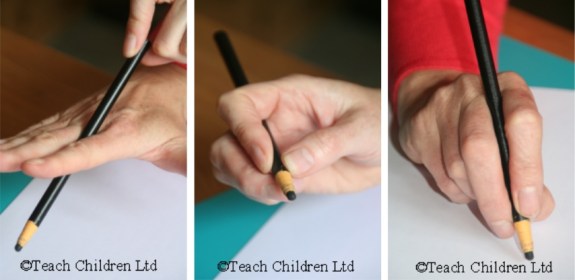
The Drawbridge Flip Method is a simple way of helping your child pick up a pencil and hold it correctly in the tripod grip for handwriting.

Follow this link for an instructional video for both left and right-handed writers on how to use the Drawbridge Flip method:

https://www.teachhandwriting.co.uk/whole-class-tripod-pencil-grip-teaching-ks1.html

Drawbridge Flip instructions:

  • Place the pencil on the table in front of the writing hand, so it forms a straight line up the table with the writing tip of the pencil pointing towards you.
  • Then using your thumb and index finger pinch the pencil either side of the shaft about 2 cm up from the tip for a right-handed writer and about 3 cm up for a left-handed writer. Dots or sticker may be placed on the pencil to help thumb and finger placement.
  • Pick the pencil up off the table and place the fingernail of the middle finger on to the pencil just above the tip.
  • Keep the ring and little finger gently curled in.
  • Push down with the middle finger so that the pencil moves up and over like a drawbridge, keep pushing until the pencil is supported in the cup (web of skin that joins the thumb, hand and index finger) and the pencil is resting on the inner edge of middle finger.
  • When writing, the end of the pencil will be angled towards the shoulder for right-handed writers and the elbow for left-handed writers.

Helping to Overcome Handwriting Difficulties

Boy head on desk 2

It can be difficult to identify why a child is having trouble learning to handwrite fluidly and with speed. This is because handwriting is a complex skill, requiring both physical skills and the knowledge of how to form and join letters correctly.

Where do you start?

Follow our step by step guide to identify where the problem may lie and then work with the child using our suggested solutions: http://bit.ly/2uFcUJF

Don’t miss the early steps, even though you think they may not be relevant to an older learner, as the child may be struggling because they have either missed an earlier stage of physical development or teaching.

Sometimes children need to be taken back before they can move forward.

Handwriting is a Physical Activity

cartoon pencil hold

Handwriting with fluidity, speed, accuracy and over longer periods of time requires a complex range of whole body and hand strengths and skills. So it is not surprising that many children find handwriting challenging.

For a good handwriting style children need to develop their:

  • Gross Motor Skills – so they can sit correctly for periods of time.
  • Fine Motor Skills – so that they can hold and control the pencil and move the paper up the table as they write.
  • Motor Memory Skills – so they can recall how to form the letters.
  • Visual Memory Skills – so they recall what a particular letter looks like.
  • Spatial Awareness Skills– so they can place the letters correctly on the paper and in relation to one another.
  • Eye Tracking Skills– scanning from left to right so that the letters are formed and placed correctly.

If a child is struggling with handwriting it is important to take a closer look at their physical abilities. If they do not have all the appropriate key physical strengths to support their handwriting development getting them to do more of the paper and pencil activities is not the answer.

Our assessments are simple to complete and do not need any specialist equipment. The important elements are; your knowledge of the child and your observations of them at play and while they are engaged in normal day to day task.

You will find our assessments on the ‘Key Strengths needed for handwriting’ page: http://bit.ly/2D1RKKs

A better understanding of a child’s key skills abilities enables you to focus more effectively, through targeted physical games and activities, to help them build and develop their skills.

You will find ‘Games to build gross and fine motor skills’ here: http://bit.ly/2FhFkR7  and ‘Games for the other physical skills’ such as visual memory and eye tracking here: http://bit.ly/2M350S1

Handwriting is such an important skill as it engages the neurological pathways and working memory in a way that pressing a keyboard just doesn’t; so once mastered it helps to open up the doorways to other literacy skills such as phonics, reading, spelling and composition.