School Reports – Handwriting Improvements Needed!

So, the school report has been received and you have been told that your child needs to improve their handwriting.

This is all well and good, but what exactly needs improving?

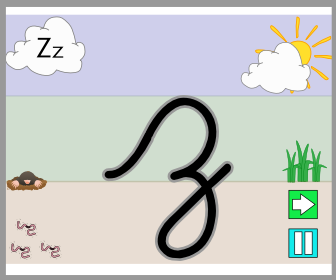
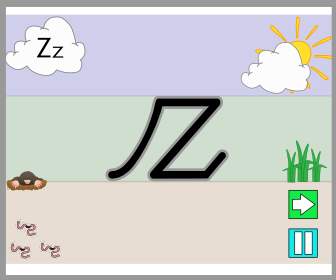
What are they finding difficult and how on earth do you write a continuous cursive z? 
So, you eventually get some handwriting practice sheets home or off the web. But no amount of time spent doing them seems to make much difference. It seemed to take longer to get them started than they spent practising handwriting. In fact they seemed worse because they were unhappy and frustrated with their own progress, so the more you try to push them the more resistant they become. Eventually you think there has to be a better way than this?

Doing more of what you are already struggling with is not always the answer. Handwriting is a complex skill to learn and there are a number of reasons why a child may be struggling.

There is a lot of information and free resources on our ‘Parent’ page which has been designed to help you: https://teachhandwriting.co.uk/parents.html

Try not to get over whelm, take things slowly and keep it simple.

Some things you might want to check and work on first before thinking about your child’s letter or join formation:

  • How are they sitting, is it a good position, it makes a difference;
  • Paper position and tilt can have a real impact especially if they are left-handed writers;
  • Are they using an efficient pencil grip for their age.

If your child is finding some or all of these elements difficult it might be that you need to work on their physical strength as well. Again, you will find information and games to help build this at the same time. And with the summer holidays coming up it is a great time for you to play games and do activities which then help them to develop the strengths and skills which may be holding them back and making handwriting a difficult task to master.

It is important to check and know which letter formations are being taught in school and that this is what you teach at home. Otherwise, you will only be causing more frustration and stress for your child.

Please note that if the letter formation being shown in the @Parent@ section is not the one being taught in school, check our @Teacher@ section of the website as you may find it there: https://teachhandwriting.co.uk/key-stage-1-handwriting-routes.html
Handwriting is a Physical Activity

Handwriting with fluidity, speed, accuracy and over longer periods of time requires a complex range of whole body and hand strengths and skills. So, it is not surprising that many children find handwriting challenging.

For a good handwriting style children need to develop their:

  • Gross Motor Skills – so they can sit correctly for periods of time.
  • Fine Motor Skills – so that they can hold and control the pencil and move the paper up the table as they write.
  • Motor Memory Skills – so they can recall how to form the letters.
  • Visual Memory Skills – so they recall what a particular letter looks like.
  • Spatial Awareness Skills– so they can place the letters correctly on the paper and in relation to one another.
  • Eye Tracking Skills– scanning from left to right so that the letters are formed and placed correctly.

If a child is struggling with handwriting it is important to take a closer look at their physical abilities. If they do not have all the appropriate key physical strengths to support their handwriting development getting them to do more of the paper and pencil activities is not the answer.

Our assessments are simple to complete and do not need any specialist equipment. The important elements are; your knowledge of the child and your observations of them at play and while they are engaged in normal day to day task.

For information on how to assess your child at home follow this link: https://teachhandwriting.co.uk/parent-assessment.html   

For information on how to assess at child at school follow this link: https://teachhandwriting.co.uk/teacher-assessment.html

A better understanding of a child’s key skills abilities enables you to focus more effectively, through targeted physical games and activities, to help them build and develop their skills.

You will find ‘Games to build gross and fine motor skills’ here: https://teachhandwriting.co.uk/games.html

Handwriting is such an important skill as it engages the neurological pathways and working memory in a way that pressing a keyboard just doesn’t; so once mastered it helps to open up the doorways to other literacy skills such as phonics, reading, spelling and composition.

Week 4 of Our 5 Week Handwriting Lesson Program

Week 4 handwriting 1

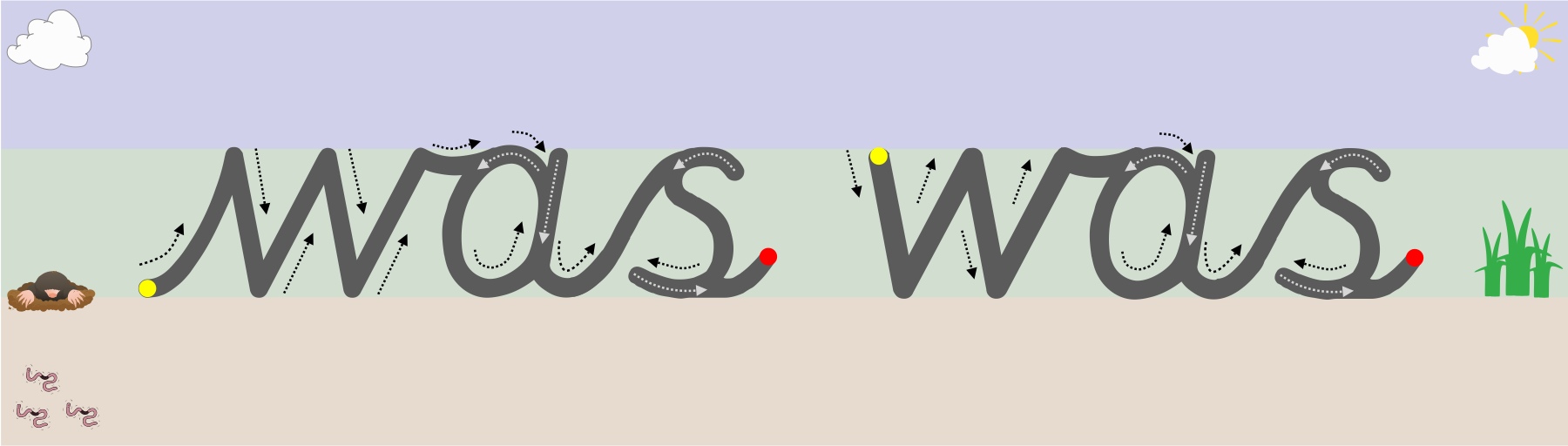
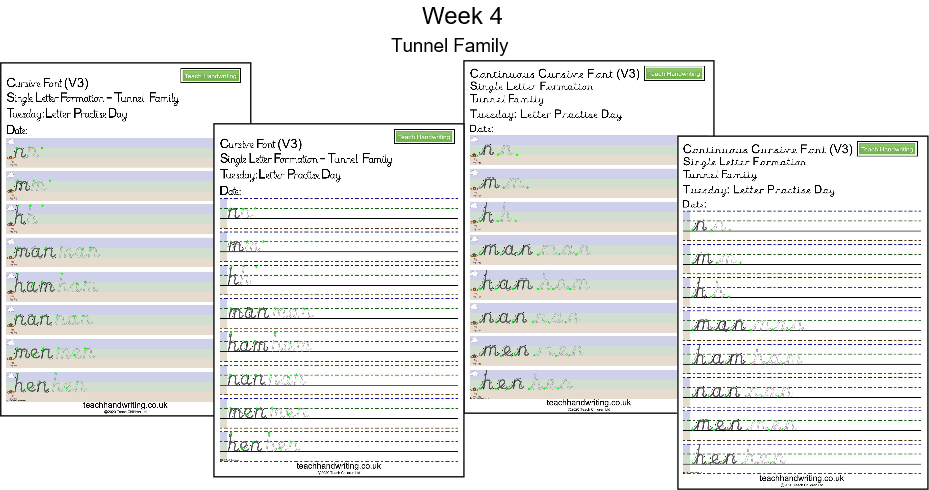
The fourth week of our handwriting program is ready for you to download. Today it introduces the ‘Tunnel Letters’.

The free weekly set of worksheets can be downloaded, printed off and used alongside our letter formation animations.

Click on this link and it will take you to the correct page of our website:

https://www.teachhandwriting.co.uk/covid-19-handwriting-lessons.html

5 Week Handwriting Lesson Program

Each week a new letter family will be introduced:

  1. Straight lines (Finished).
  2. Curves to start (available until Sunday 10th May 2020).
  3. Top exit
  4. Tunnel
  5. Hooks, loops and lines

There is a separate worksheet for each day:

Monday – Have a go worksheet

Today you can check if your child knows how to write the letters and if they are writing them correctly. If you know your child cannot form the letters in the letter family then show them the letter animations and then let them have a go.

Tuesday & Wednesday – Specific letter practise days

Each day focuses on different sets of letters from the letter family.

Thursday & Friday – Letter practise days

On these days letters from the letter family being taught and some letters from letter families already introduced are practised.

There are also “Rainbow” worksheets where your child can share with others what they have learnt and achieved over the week as well as appropriately sized practise paper for them.

We hope you find these useful. If you have any questions about this 5 week handwriting program please feel free to contact us through the contact us page and we will do our best to help.

Take care Lucy & Chris from Teach Children Ltd

When to Introduce Joined Handwriting

CC & Cursive 1

Here at Teach Children we believe that a child is only ready to start learning to join their handwriting when:

  • They have learnt to form all 26 lower case letters correctly
  • Letters are of a consistent and suitable size (not necessarily the perfect size, remember big is beautiful)
  • Letters are positioned appropriately on the writing line as well as in relation to one another.

Children generally begin to join letters between the ages of 6 to 7 years old, depending on the handwriting font style being taught. Those taught a continuous cursive font style from the beginning tend to join much earlier due to the nature of this font (for some by the end of their Reception Year).

Children do not need to be able to remember how to correctly form all their capital letters before they are taught how to join their letters. This is because capital letters never join to the lower-case letters in a word. However, for these children correct capital letter formation needs to be taught alongside the introduction of letter joins.

The ultimate aim is for a child to develop a good handwriting style; which means;

  • They can produce and maintain a good speed
  • Have a fluid hand movement that is comfortable
  • Letters are of a consistent and appropriate size, positioned correctly
  • Handwriting is legible (so others can read it easily).

For some children (mainly SEND pupils) this may mean that they will always print or use a single letter form of writing as learning to join is just not appropriate. But that does not mean they will not comply with the bullet points above.

Be School Ready – What Letter Font is Your Child’s School Teaching?

CC & Cursive 1

There is no standardized font style or teaching route stipulated in the National Curriculums for schools in the UK, only that it needs to be a consistent approach throughout the school.  So it is really important that you know which font and teaching route your child’s school is using.

There are a 4 teaching routes a school can choose from when teaching lower-case letters:

  1. Print, then Cursive; finally introduce Continuous Cursive to join the cursive letters.
  2. Print, then Continuous Cursive.
  3. Cursive and then Continuous Cursive to join the cursive letters.
  4. Continuous Cursive.

All the above are good teaching routes, the only difference is how many font styles a child has to learn and how long it takes before they learn how to join their letters.

The Difference between Print, Cursive and Continuous Cursive Handwriting Fonts

Print Font

  • The letters have different start points.
  • There are a number of different letter finish points.

Cursive or Continuous Cursive?

Be aware, some schools will say they are teaching Cursive when in fact they are teaching Continuous Cursive.

They are in fact 2 different handwriting fonts.

Cursive:

  • The letters start at different points (the same as print).
  • The finishing points for all the letters is the writing line; except for, o, r, v and w, which have a top exit stroke.
  • The single letter formations are taught with just the exit strokes.

 Continuous Cursive:

  • The starting point for all the letters is the same; on the writing line.
  • The finishing points for all the letters is also at the writing line; except for, o, r, v and w, which have a top exit stroke.
  • The single letter formations are taught with the entry and exit strokes, this makes the transition from single letter formation to joined handwriting very straightforward and allows it to occur sooner.

Check out our Letter Formation section of the website for more information, free animations and worksheets: http://bit.ly/2F9P7cI

Is it a cursive or continuous cursive handwriting font?

CC & Cursive 1

Looking at a few different school websites and queries from parents this week we found that some think that Cursive is just short for Continuous Cursive. In fact, they are two different handwriting font styles:

Cursive:

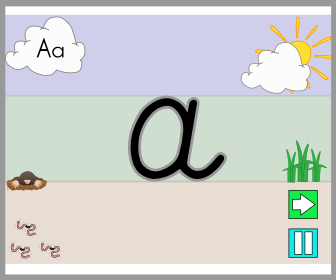
Cursive a Cloud

https://www.teachhandwriting.co.uk/cursive-beginners-letter-choices.html   


  • The letters start at different points (the same as print letters).
  • The finishing points for all the letters is at the writing line (with a small exit stroke); except for, o, r, v and w, which have a top exit stroke.
  • The single letter formations are taught with just the exit strokes.
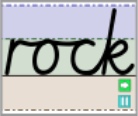
  • When cursive is joined the first letter in the word does not have an entry stroke for example:

Curive Rock

https://www.teachhandwriting.co.uk/cursive-joins-letter-choices.html


Continuous Cursive

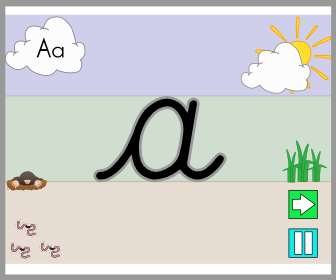
httpsCC a Cloud://www.teachhandwriting.co.uk/continuous-cursive-beginners-letter-choices.html                                            


  • The starting point for all the letters is the same; on the writing line.
  • The finishing points for all the letters is also at the writing line; except for, o, r, v and w, which have a top exit stroke.
  • The single letter formations are taught with the entry and exit strokes, this makes the transition from single letter formation to joined handwriting very straightforward and allows it to occur sooner.
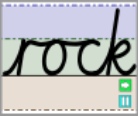
  • When continuous cursive is joined the first letter in the word has an entry stroke for example:

CC Rock

https://www.teachhandwriting.co.uk/continuous-cursive-joins-letter-choices.html


 Be aware, some schools will say they are teaching a Cursive font when in fact they are teaching a Continuous Cursive font.

Teaching Letter Joins – A Systematic Approach

Joins twitter

We would recommend teaching joins in join type groups, whether your child has learnt cursive or continuous cursive single letter fonts.

Teaching the join types in their groups helps a child to understand the directional pushes and pulls required to successfully join the different letter combinations.

There are 4 main groups of letter joins; bottom joins, bottom to “c” shape joins, “e” joins (top and bottom join strokes) and top joins.

Moving from Cursive Single Letters to Joining

There are seven join strokes to be taught. Most children will find the bottom joins the easiest to achieve, as it only requires the extension of the exit stroke they already put on the letters. The bottom to “c” shape joins can be tricky at first but soon mastered. The joins that tend to cause the most confusion and difficulty are the “e” joiners and top exit joiners.

I would recommend teaching the bottom joins first, then the ‘e’ joins and finally the top exit letter joins.

Moving from Continuous Cursive Single Letters to Joining

There are three join strokes to be taught. The easiest is the bottom exit letters (the majority of the letters), all a child has to do is write the letters closer together without lifting their pencil off the paper. Only the top to “e” and top joiners need to be taught for continuous cursive, as the nature of the font style means that the lead-in and exit strokes needed to join the majority of letter combinations have already been taught.

I would recommend teaching the bottom joins first, then the top exit to ‘e’ join and finally the top exit letter joins.

For our free join animations and worksheets: http://bit.ly/2F9P7cI

For tips to support the teaching of joins check out our Teaching Tips section:  http://bit.ly/2AaX8sk 

Handwriting Teaching Routes and Letter fonts

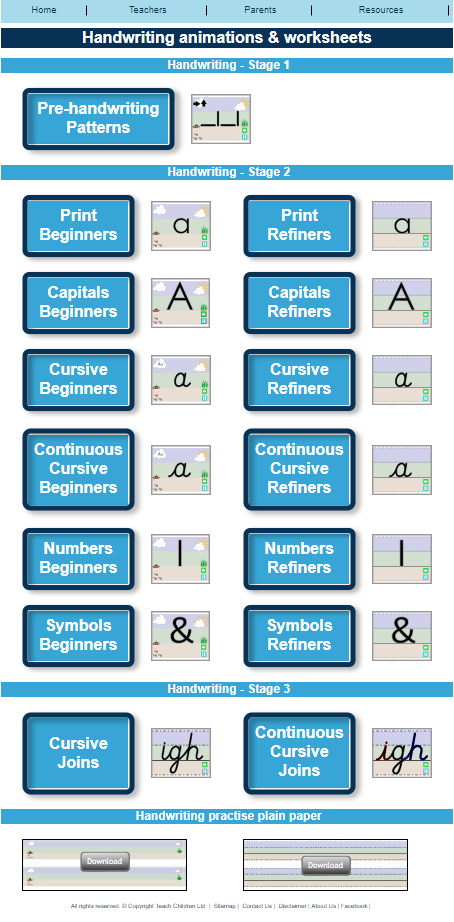
Handwriting animation page

The website design has been up for two weeks now and we hope that you are finding your way around OK.

Over the next few weeks we will be guiding you through some of the new changes. All the animations, worksheets, games, activities and support information that was on the old website design is still in the new one with some new elements and most importantly is still FREE for all to use on a non-commercial basis.

Teaching Routes

To support schools and the parents of children whose school use the website to teach their children, we have organised the animations and worksheets into our 4 main Teaching Routes. These are based on the most common teaching routes (approaches) used in schools to teach handwriting.

We refer to these as Teaching Routes A, B, C and D. The teaching route used by a school will depend on which letter font they will introduce in Foundation Stage (4 – 5 year olds) and then teach in Key Stage 1 (5 – 7 year olds).

More information on the Teaching Routes for handwriting can be found in our Handwriting Letters Fonts section: http://bit.ly/2RFlHEN

Letter Fonts

There are four main font styles taught in UK schools; manuscript capital letters, manuscript print (sometimes referred to as the ball and stick method), cursive and continuous cursive.

The capital letter and print letters in the UK have a standard letter shape and formation for each of the 26 letters of the alphabet. However, this is not the case for cursive and continuous cursive letter fonts.

For the Teach Handwriting Website and The Teaching Handwriting Scheme for schools (if purchased) we have standardized 23 of the letters in the cursive and continuous cursive fonts and offer different versions for the letters w, x and z.

The letter version chosen dictates which letter family (teaching groups) they belong in. This is why we have the Letter Versions 1, 2, 3 and 4. In each letter version all the letters and worksheets are in the appropriate letter families.

More information on the Letter Versions for handwriting can be found in our Handwriting Letters Fonts section: http://bit.ly/2RFlHEN

Get your free animations and worksheets for all our fonts letters and numbers by clicking through to the Handwriting animations and worksheets page on our website: http://bit.ly/2F9P7cI

Back to School – What Letter Font is Your Child’s School Teaching?

There is no standardized font style or teaching route stipulated in the National Curriculums for schools in the UK, only that it needs to be a consistent approach throughout the school.  So it is really important that you know which font and teaching route your child’s school is using.

There are a 4 teaching routes a school can choose from when teaching lower-case letters:

  1. Print, then Cursive; finally introduce Continuous Cursive to join the cursive letters.
  2. Print, then Continuous Cursive.
  3. Cursive and then Continuous Cursive for join the cursive letters.
  4. Continuous Cursive.

All the above are good teaching routes, the only difference is how many font styles a child has to learn and how long it takes before they learn how to join their letters.

The Difference between Print, Cursive and Continuous Cursive Handwriting Fonts

Print Font

  • The letters have different start points.
  • There are a number of different letter finish points.

Cursive or Continuous Cursive?

Be aware, some schools will say they are teaching Cursive when in fact they are teaching Continuous Cursive.

They are in fact 2 different handwriting fonts.

Cursive:

  • The letters start at different points (the same as print).
  • The finishing points for all the letters is the writing line; except for, o, r, v and w, which have a top exit stroke.
  • The single letter formations are taught with just the exit strokes.

Continuous Cursive:

The starting point for all the letters is the same; on the writing line.

  • The finishing points for all the letters is also at the writing line; except for, o, r, v and w, which have a top exit stroke.
  • The single letter formations are taught with the entry and exit strokes, this makes the transition from single letter formation to joined handwriting very straightforward and allows it to occur sooner.

Check out our Letter Formation section of the website for more information, free animations and worksheets: http://bit.ly/1dqBYFm

Teaching Letter Joins – A Systematic Approach

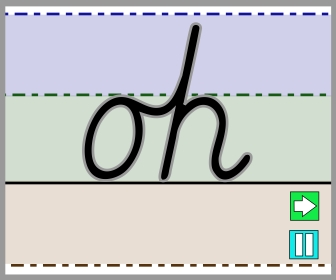
Cursive oh join tall   cc oh join tall

We would recommend the same approach to joining letters whether your child has learnt cursive or continuous cursive single letter fonts; teaching the joins in join type groups.

Teaching the join types in their groups helps a child to understand the directional push and pulls required to successfully join the different letter combinations.

There are 4 main groups of letter joins; bottom joins, bottom to “c” shape joins, “e” joins (top and bottom join strokes) and top joins.

Moving from Cursive Single Letters to Joining

There are seven join strokes to be taught Most children will find the bottom joins the easiest to achieve, as it only requires the extension of the exit stroke they already put on the letters. The bottom to “c” shape joins can be tricky at first but soon mastered. The joins that tend to cause the most confusion and difficulty are the “e” joiners and top exit joiners.

I would recommend teaching the bottom joins first, then the ‘e’ joins and finally the top exit letter joins.

Moving from Continuous Cursive Single Letters to Joining

There are three join strokes to be taught. The easiest is the bottom exit letters (the majority of the letters), all a child has to do is write the letters closer together without lifting their pencil off the paper. Only the top to “e” and top joiners need to be taught for continuous cursive, as the nature of the font style means that the lead-in and exit strokes needed to join the majority of letter combinations have already been taught.

I would recommend teaching the bottom joins first, then the top exit to ‘e’ join and finally the top exit letter joins.

For more information about the letter join type groups and links to supporting animations check out our ‘How to Join Letters of the Alphabet’: http://bit.ly/1y0Haf7

and ‘Tips For Teaching How to Join Letters When Handwriting’: http://bit.ly/1Iv1g5Q