Why Listening Skills are Important in Learning to Handwrite

Listening Games Scanning

A child with poor listening skills will find it difficult to complete tasks especially complex ones such as learning to handwrite. This is because they have not taken in all the information and so not understood the full extent of the task, or what was required of them. This can lead to a child flitting from one activity to another and never finishing anything, slowing down their learning. They also miss out on the sense of achievement and feeling of pride when a task is completed. This helps to build a child’s confidence, self-esteem and self-motivation to try again or attempt a more challenging task.

Listening is a complicated skill that requires children to learn how to pay attention – being able to focus on a particular voice or sound by filtering out other voices and ambient noises. They then have to concentrate on the voice or sounds to take in the information, building the stamina needed to listen for extended periods of time. Then they have to interpret that information to gain meaning – comprehension.

Listening is not a set of behaviours but a set of skills that need to be taught and developed, starting from birth.

For many children good listening skills do not develop naturally, they have to be taught!

Great Summer Fun Listening Games

These games are designed to help a child learn how to block out ambient noises so that they focus and concentrate on one particular sound.

Sound Scanning Games

The idea is to identify and talk about different sounds in different locations; in the park or at home in different rooms. Ask the child to listen for a moment (timed activity 30 seconds to start with then increase) and to pick out different sounds they can hear. Some will be close and easier to identify, other sounds may be further away and require more focused concentration to work out what they may be.

  • Sound Scanning Questions to help:
      • What can you hear that is far away?
      • What can you hear that is close by?
      • What can you hear that is loud?
      • What can you hear that is quiet?
      • What can you hear that makes a high pitched sound?
      • What can you hear that makes a low pitched sound?
      • What can you hear that sounds big?
      • What can you hear that sounds small?
  • Listening Walk Activities- You could record some of the sounds heard and talked about on the walk. Try changing the ‘What can you …?’ questions to ‘What did you…?’ Depending on your child’s age they may be able to draw a sound scape picture showing all the things they heard on the walk.
  • Where is the Sound? – The aim of the game is find out where the sound is coming from. Start by using something that makes a good clear sound. Ask your child to cover their eyes (can use a blindfold) and have them sit or stand in the middle of the room. Move around the room, starting not too far away from them and make the sound. Pause between each sound to give your child time to settle and focus on it before you make the next sound. Try to keep an even, slow pace. The aim is for your child to point in the direction they believe the sound is coming from. Gradually move further away, maintaining the same sound level. Swap places with your child, so you have to guess where the sound is coming from.

To make it more challenging:

  • Change the volume of the noise.
  • Change the object that is making the noise.
  • Change the speed (rhythm), as well as the location, at which the sounds are made.

Have Fun!

The Sun is Out!

I know last week we said we would start to look at alternative pencil grip, but the sun is out! (Promise we will start the pencil grip series next week.)

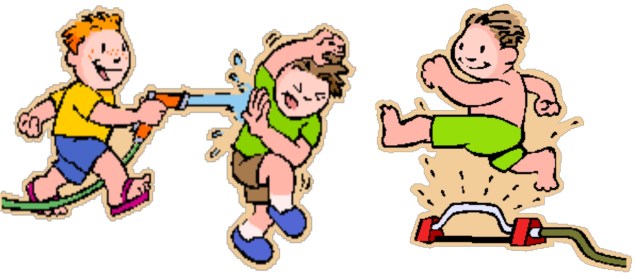
The SUN is out and it is time for the water fights and games to begin.

How can water fights and games, where you can get wet, be handwriting homework?

It’s June, the weather is perfect, so why not set up water squirting games in the garden. The kids are waterproof and everything else will dry out, eventually!

You will be encouraging your child to develop their hand strength, co-ordination and eye tracking skills (all handwriting skills), while increasing your cool adult status.

Some fun water games:

  • Try setting up a target wall, using chalk to draw the targets.
    • How many of the targets can you hit with water squirted from a water pistol or squeeze bottle in a set time.
    • How many targets can be washed off.
  • Set up a skittles range.
    • Each skittle hit with water can be worth a certain number of points, or the distance of the skittles may affect their value.
    • A time trial game to hit all the skittles. If you are using plastic bottles as skittles try making some of them a little heavier by putting sand or dirt in them to make it a bit harder to knock them over.
  • Move the object race games.
    • A light toy/ball has to be moved by squirts of water over a distance.
    • A range of objects moved in to target areas to gain points.

The only limitation is you and your child’s imagination and trust me kids never tire of finding new ways to play with water (but then again neither do many adults)!

Homework has never been so much FUN!


Easter Egg Hunt to Help Teach Handwriting

Easter egg Hunt

The Easter Holidays will soon be upon us, so here are some fun activities to keep children of all ages entertained whether we have rain or sunshine.

An Easter egg, or treasure, hunt is a great way to teach children directional language. Being able to understand directional and placement (prepositions) vocabulary is important for understanding everyday instructions such as ‘put your cup on the table’; ‘go along the hall and stop at the door in front of you’.

We also use this directional language to explain how to draw patterns and write letters, which is another reason why it is important for young children to be introduced to, and have a good understanding of, this kind of vocabulary.

Through Easter egg, or treasure, hunts you can introduce new directional and placement language in a fun and exciting way. There are a number of different ways to approach this:

  • You can give verbal instructions to the hidden egg/treasure.
  • You could create a map for them to follow and ask them to talk you through the map, supporting them with new language as necessary.
  • You could use a mixture of verbal and map clues.
  • For older children get them to hide the egg/treasure and give you instructions, or draw a map.
  • If you have more than one egg/treasure and they are of different sizes make the larger ones more difficult to find.

The important thing is the language shared. Words and phrases to use are: left, right, straight on, forward, backwards, about turn, turn around, up, down, higher, lower, stop, next to, in front, beside, underneath, on top of, behind, on the left of, on the right of, outside, and inside.

Easter egg, or treasure, hunts are a great whole family activity and you are never too young or too old to join in!

Christmas Fun That Develops Handwriting Skills and No Pencil!

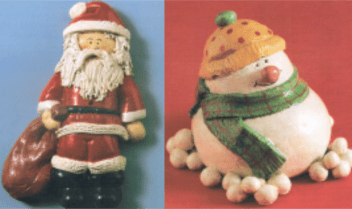
Handwriting skills don’t start with pencil and paper they begin with earlier play opportunities. Play-dough type modelling, finger painting or printing activities are great for developing hand and finger strength, bi-lateral coordination and sensory perception. They are also useful activities for learning and perfecting different grips for using tools.

So why not make some great Christmas gifts and tree decorations with your child. Not only will they melt the hearts of those who receive them but you will be developing your child’s fine motor skills (needed for good handwriting) while having fun, can’t be bad!

On our Free Activities page in our Resources section you will find a number of fun ideas for crafty gift ideas.

Have fun!