What is classed as a poor pencil grip?

Once a child has gone through the five pencil grip stages, so after the age of about 6, a poor pencil grip is any that causes:

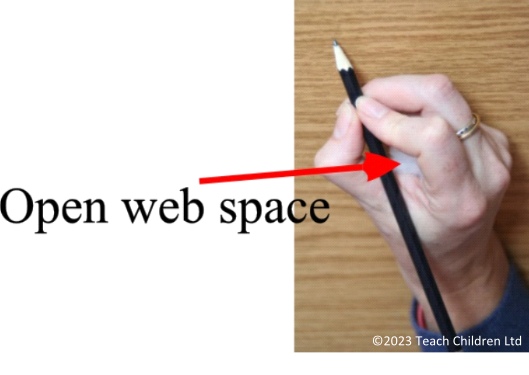
  • a very small or closed web space (as seen in the two photos below),
  • restricting the movement of the fingers and wrist,
  • makes handwriting hard work.

This is sometimes referred to as a “death grip” pencil grip.

The most effective grip recommended for children by Occupational Therapists and Handwriting Specialists worldwide is the dynamic tripod grip, which gives an open web space. This allows the fingers to move freely so that a fluid handwriting style can be achieved.

For an explanation of what the dynamic tripod grip looks like for left and right-handed writers:  https://teachhandwriting.co.uk/tripod-pencil-grip.html

For videos on how to use our quick drawbridge flip, self-correcting method to help children pick up a pencil so they have holding it correctly in the tripod grip for both left and right-handed writers:  https://teachhandwriting.co.uk/teaching-tripod-pencil-grip.html

Why do Children Fidget or Appear Bored When Handwriting?

There are two key elements that can cause a child to fidget or appear bored when handwriting, both relate to being able to sit correctly:

  1. The height of the table and chair.
  2. The child’s physical core strength.

Table and Chair Height

A poor and uncomfortable sitting position that causes a child to fidget and wriggle about affects their ability to concentrate and pay attention; for example, when listening to a teacher, as well as distracting them from the task and breaking their train of thought. It also puts unnecessary strain on the body, making sitting tasks such as handwriting more tiring.

When a child is sitting on a chair too high for them, they may sit swinging their legs, causing the body to rock slightly. They might wrap their legs around the legs of the chair to stop them aching, which is not good for their circulation and can cause them to lean back away from the table top. Some children will sit with their legs underneath their bottom which often causes them to lean too far over the table due to being off balance, once again not good for their circulation or for handwriting and other fine motor skill activities such as eating or drawing.

If a table is too high for a child, they will have their arms raised too high, causing tension in the upper arms and shoulders or they may rest their head on the table. Both have a profound effect on a child’s ability to handwrite with fluidity, comfort and for any period of time. Another result of this is a child fidgets as they try to readjust their position to get comfortable, which in turn distracts them from the task at hand. 

For tips and ideas on how to help a child develop a good sitting posture and position for handwriting check out our FAQ section of the ‘Sitting’ section on the Parent area of our website: https://teachhandwriting.co.uk/sitting-faq.html

Teachers will find useful information using this link to our website:

website: https://teachhandwriting.co.uk/handwriting-sitting-position-desk.html

Sitting and Core Strength

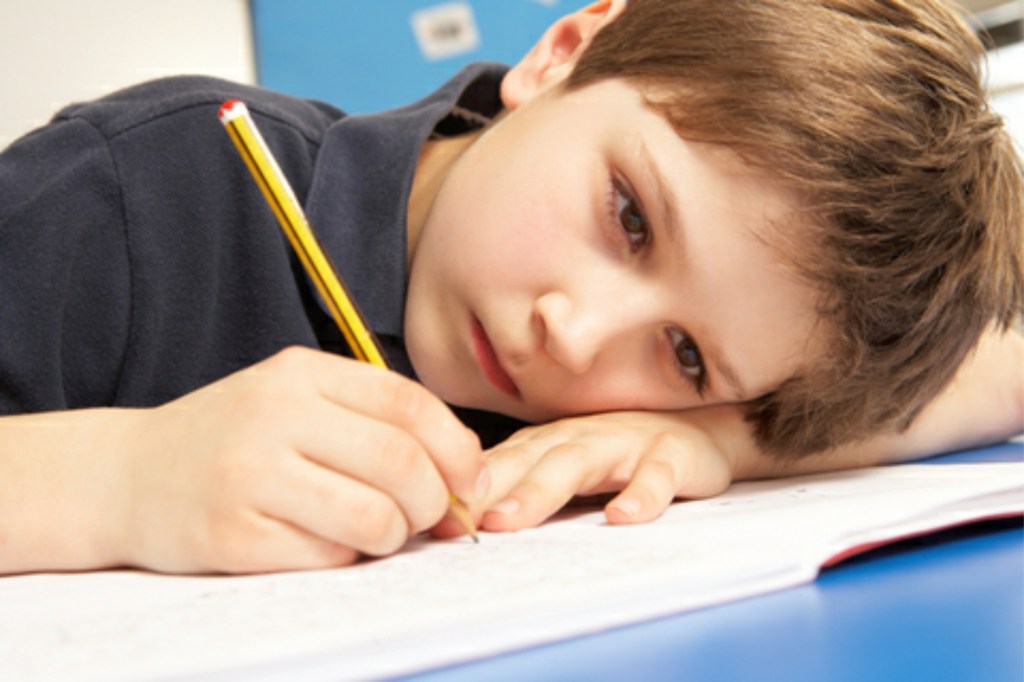
We often see children slouched over a desk, laying their head on the table or with their head propped up by their hand and arm, or fidgeting about while they are sitting at the desk writing. This can look as if they are bored and disinterested in what they are doing. However, this is not generally the case.

A poor posture position is not always due to boredom or incorrect chair and table height. For some children it is a lack of body strength or core muscle tone (the large muscle groups that control shoulder stability and the trunk of the body) that work to enable us to sit and stand upright for sustained periods of time.

We expect our children to sit at a desk for long periods of time at school. To be able to maintain a good sitting position for writing over any length of time requires good core strength. Those who lack strong core strength tend to slouch over the desk, lay their head on the desk, hold their head in their hand or pull their chair in so far that they can rest their tummy on the edge of the table to help them keep a more upright position.

This is bad for them, as it puts unnecessary strain on the body, causing neck or backache and discomfort, which in turn make them fidget as they try to get comfortable. All this can distract them from the task in hand and limit their handwriting ability as it reduces their hand and fingers movements to handwrite freely.

For more information, games and activities on developing a child’s core strengths check out our ‘Play’ section of the Parents area of our website: https://teachhandwriting.co.uk/games.html

Teachers will find useful information using this link to our website: https://teachhandwriting.co.uk/handwriting-difficulties.html

Handwriting is a Physical Activity

Handwriting with fluidity, speed, accuracy and over longer periods of time requires a complex range of whole body and hand strengths and skills. So, it is not surprising that many children find handwriting challenging.

For a good handwriting style children need to develop their:

  • Gross Motor Skills – so they can sit correctly for periods of time.
  • Fine Motor Skills – so that they can hold and control the pencil and move the paper up the table as they write.
  • Motor Memory Skills – so they can recall how to form the letters.
  • Visual Memory Skills – so they recall what a particular letter looks like.
  • Spatial Awareness Skills– so they can place the letters correctly on the paper and in relation to one another.
  • Eye Tracking Skills– scanning from left to right so that the letters are formed and placed correctly.

If a child is struggling with handwriting it is important to take a closer look at their physical abilities. If they do not have all the appropriate key physical strengths to support their handwriting development getting them to do more of the paper and pencil activities is not the answer.

Our assessments are simple to complete and do not need any specialist equipment. The important elements are; your knowledge of the child and your observations of them at play and while they are engaged in normal day to day task.

For information on how to assess your child at home follow this link: https://teachhandwriting.co.uk/parent-assessment.html   

For information on how to assess at child at school follow this link: https://teachhandwriting.co.uk/teacher-assessment.html

A better understanding of a child’s key skills abilities enables you to focus more effectively, through targeted physical games and activities, to help them build and develop their skills.

You will find ‘Games to build gross and fine motor skills’ here: https://teachhandwriting.co.uk/games.html

Handwriting is such an important skill as it engages the neurological pathways and working memory in a way that pressing a keyboard just doesn’t; so once mastered it helps to open up the doorways to other literacy skills such as phonics, reading, spelling and composition.

Warm up for #Handwriting!

Before starting to work on letter formation, joins or even the pre-handwriting patterns it is a good idea to help focus your child’s body on the activity that it is about to be performed in a fun and relaxed way.

The exercises only take a couple of minutes to do. Not only can they be done at the beginning of the session but throughout and at the end to help relax muscles and release tension that may build up over the session. Tense muscles can make handwriting activities difficult and tiring for your child.

They are fun to do, which usually brings a smile and often laughter, an added tonic to any learning experience.

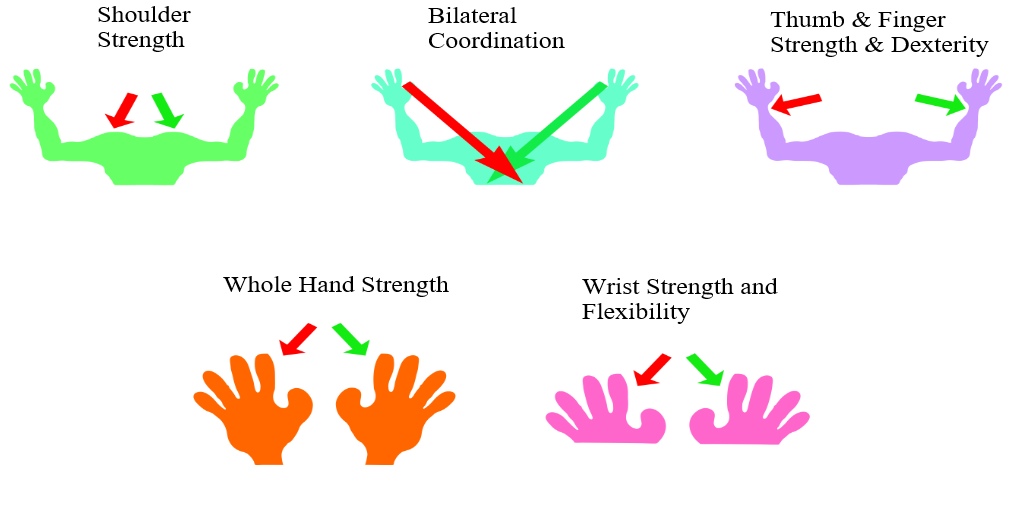
Five areas to support the body with handwriting are covered in the warm up exercises:

  1. Shoulder stability and strength
  2. Crossing the mid-line
  3. Wrist strength and flexibility
  4. Thumb and finger strength and dexterity
  5. Whole hand strength and dexterity

For more information go to our teach handwriting website here is a direct link to the warm up page:  https://teachhandwriting.co.uk/warm-ups.html