Stage 2 to #Handwriting Success – Single Letter Formation (non-pencil activities)

Over the last couple of weeks, we explained that pre-handwriting patterns are the first stage of learning to handwrite. Once a child has mastered these, they are ready to start learning how to form letters.

But where do you start?

Our view is to focus on lower-case letters first and only the capital letters for the first letter in a child’s, examples: Peter Rabbit, Sally Green, George Blue or Mary Shell.

Why?

  • One reason is that about 95% of what children write, and are exposed to, is in a lower-case form and only 5% in capital.
  • Lower-case letters are far less complicated, requiring fewer pencil lifts to complete the letters.
  • As both lower-case and capital letters require a child to form curved lines, a skill which most children have to practice, writing lower-case letters is no more difficult than writing capitals.
  • In a young child’s writing, all the letters are initially the same size, whether they are capitals or lower case; it is part of the normal developmental path of handwriting. So, the view that teaching capitals letters is easier because they are bigger is not true.
  • Young children who have learnt mostly capital letters first find it difficult to stop, as it is so ingrained into the memory, often using them half way through words and sentences. Even when they are older this inappropriate use of capitals creeps back into their work especially if they are tired or concentrating hard on composing their work.

A child’s first major achievement, in their eyes, is to write their name. So, although concentrating on lower-case letters, teach them how to form the capital letter for the first letters of their name to get them excited about handwriting.

As they master the lower-case letters introduce the remainder of the capital letters. It is important that both are taught so that a child can develop a speedy, fluid and legible handwriting style.

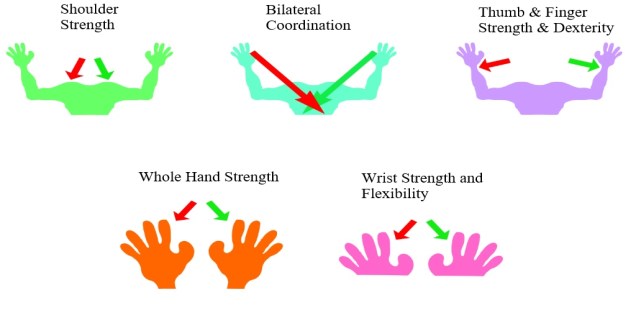
As with the pre-handwriting patterns, part one of learning correct letter formation is through non-pencil activities. This is because it supports the storage of the larger gross motor memory movements; the stage of development that EYFS are working at. They can then tap into those gross motor memory movements as their fine motor skills are developing; taking the stored large movement to a smaller and smaller scale.  

Once again ‘The writing framework’ acknowledges that:

“On joining reception, some children may need teaching and practice in using and manoeuvring their thumb, wrist and shoulder muscles in the way they need for handwriting. Initially, handwriting lessons could include learning the movements needed to form letters, practising these movements at a range of sizes…”

Department of Education; The writing framework: July 2025; page 24; https://www.gov.uk/government/publications/the-writing-framework

It is through play that you can really engage a child in learning how to correctly form their letters, and has always been an important foundation stone in our Foundation Stage Teach Handwriting Scheme (https://www.teachhandwriting.co.uk/handwriting-teaching-manuals.html#hs-fs ) and strongly promoted on our website https://www.teachhandwriting.co.uk ) and blog (https://teachhandwriting.blog/ ) since 2012.  

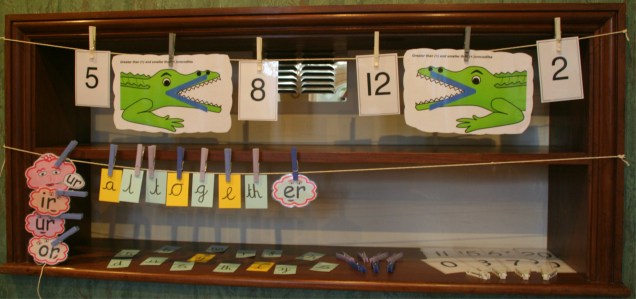
Our non-pencil – ‘Big to Small’ activities are an easy fun way to start developing these skills early on through play: https://teachhandwriting.co.uk/big-to-small.html

Stage 1 to #Handwriting Success – Pre-handwriting Patterns

Last week we looked at non-pencil pre-handwriting pattern development, working on large scale movements through play activities.

The next stage in the progression is to move to pencil and paper activities.

Again ‘The writing framework’ states that:

“Teaching should then progress to specific handwriting lessons and practice. This might initially include systematic teaching of and practice in moving the pencil to master the horizontal, diagonal, vertical and circular strokes needed for writing.”

Department of Education; The writing framework: July 2025; page 25; https://www.gov.uk/government/publications/the-writing-framework

Here at Teach Children Ltd we always recommend teaching the handwriting patterns in groups, as this helps to further develop the specific movements (pushes and pulls) required to form the patterns and helps commit them to the motor memory. A child can then recall these motor memories to support them as they begin to form letters.

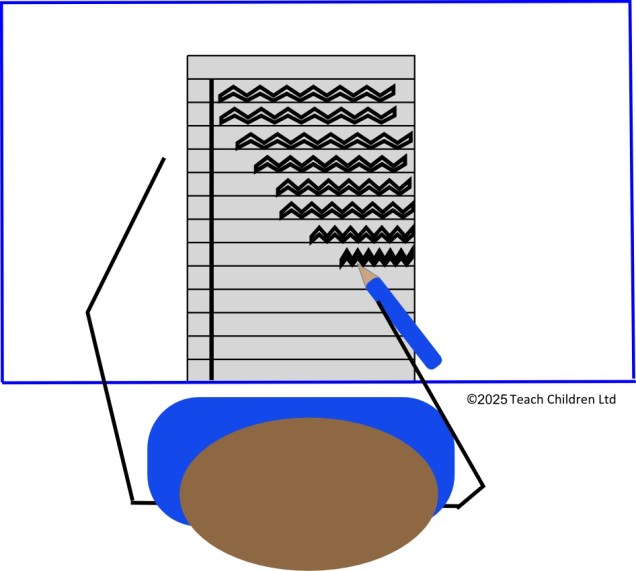
Pre-handwriting patterns that encourage a child to move their pencil from left to right are very important for left-handed writers. They need to be taught this so that they can make the cross motion in the H, T, J, G and I from left to right, as their natural instinct is to go from right to left. If this is not corrected when writing E and F the cross lines will not be “anchored” to the letter.

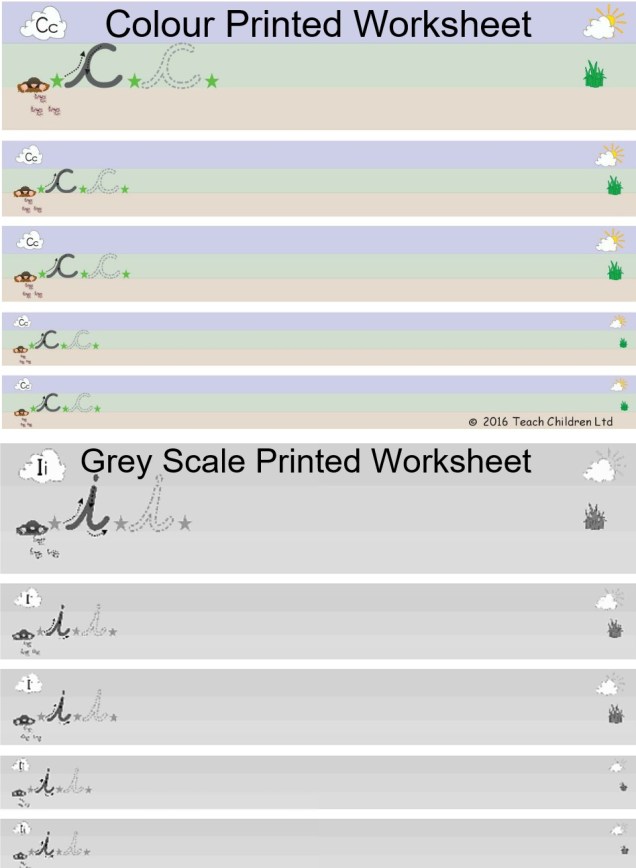
Once the handwriting patterns have been mastered a child will have the confidence and skills base necessary to start forming letters, numbers and symbols.

Have you got your Free Pre-handwriting Pattern Animations & Worksheets?

For Teachers: https://teachhandwriting.co.uk/pre-handwriting-patterns.html

For Parents: https://teachhandwriting.co.uk/patterns.html

Stage 1 to #Handwriting Success – Non-pencil – Pre-handwriting Patterns

Learning to handwrite does not start with pen and paper but through play (non-pencil activities), as children explore shape and motion (how the body moves) through their senses – touch, sight and body awareness. Play is such an important element of your child’s physical, emotional, social and academic development.

Pre-handwriting patterns are the first stage in supporting a child to handwriting success. They help the child to learn the shapes and directional pushes and pulls required to form letters. All letters are a combination of these shapes and lines.

Young children can start to learn these patterns through their play, long before they are ready to pick up a pencil, moving toys back and forth across the floor or whirling them around in the air. To a child it is just play and fun, but you are doing something far more powerful and constructive by helping them to develop the motor memory patterns and directional movement skills they will need for handwriting.

Later, as their coordination and gross motor skills develop, they make more controlled and varied movement patterns in their play. Changing directions, speed and size are all prerequisite skills needed for learning pre-handwriting patterns.

Once again ‘The writing framework’ acknowledges that:

“On joining reception, some children may need teaching and practice in using and manoeuvring their thumb, wrist and shoulder muscles in the way they need for handwriting. Initially, handwriting lessons could include learning the movements needed to form letters, practising these movements at a range of sizes…”

Department of Education; The writing framework: July 2025; page 24; https://www.gov.uk/government/publications/the-writing-framework

It is through play that you can really engage a child in learning how to correctly form these movements, or what we refer to as Pre-handwriting Patterns, that have always been an important foundation stone in our Foundation Stage Teach Handwriting Scheme (https://www.teachhandwriting.co.uk/handwriting-teaching-manuals.html#hs-fs ) and strongly promoted on our website 😦 https://www.teachhandwriting.co.uk/index.html ) and blog (https://teachhandwriting.blog/ ) since 2012.  

Our non-pencil – ‘Big to Small’ activities are an easy fun way to start developing these skills early on through play: https://teachhandwriting.co.uk/big-to-small.html

The Three Stages to Learning #Handwriting

There are three distinct stages for children to progress through to develop a good handwriting style:

Stage 1 – Pre-handwriting Patterns

Pre-handwriting patterns support a child towards handwriting success. They help the them to learn the shapes and directional pushes and pulls required to form letters. All letters are a combination of these shapes and lines.

Stage 2 – Single Letter Formation

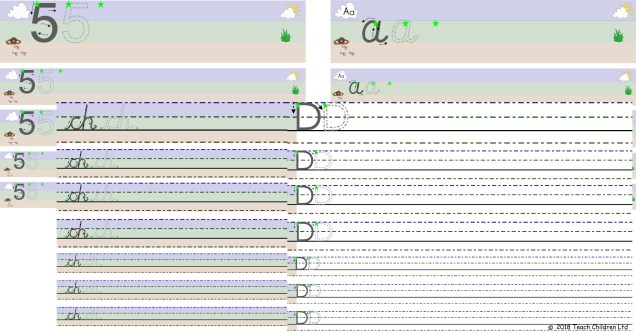
For children to develop a good handwriting style it is important to learn how to form the letters correctly.

Beginning with lower-case letters and only the capital letters for the first letter in a child’s name, examples: Peter Rabbit, Sally Green, George Blue or Mary Shell.

Learning the correct lower-case letter formation also makes the transition from single letter formation to joined letter handwriting much easier.

Stage 3 – Joined Handwriting

Learning to join letters for handwriting enables children to develop a speedy, fluid and legible handwriting style.