Why Listening Skills are Important in Learning to Handwrite

Listening Games Scanning

A child with poor listening skills will find it difficult to complete tasks especially complex ones such as learning to handwrite. This is because they have not taken in all the information and so not understood the full extent of the task, or what was required of them. This can lead to a child flitting from one activity to another and never finishing anything, slowing down their learning. They also miss out on the sense of achievement and feeling of pride when a task is completed. This helps to build a child’s confidence, self-esteem and self-motivation to try again or attempt a more challenging task.

Listening is a complicated skill that requires children to learn how to pay attention – being able to focus on a particular voice or sound by filtering out other voices and ambient noises. They then have to concentrate on the voice or sounds to take in the information, building the stamina needed to listen for extended periods of time. Then they have to interpret that information to gain meaning – comprehension.

Listening is not a set of behaviours but a set of skills that need to be taught and developed, starting from birth.

For many children good listening skills do not develop naturally, they have to be taught!

Great Summer Fun Listening Games

These games are designed to help a child learn how to block out ambient noises so that they focus and concentrate on one particular sound.

Sound Scanning Games

The idea is to identify and talk about different sounds in different locations; in the park or at home in different rooms. Ask the child to listen for a moment (timed activity 30 seconds to start with then increase) and to pick out different sounds they can hear. Some will be close and easier to identify, other sounds may be further away and require more focused concentration to work out what they may be.

  • Sound Scanning Questions to help:
      • What can you hear that is far away?
      • What can you hear that is close by?
      • What can you hear that is loud?
      • What can you hear that is quiet?
      • What can you hear that makes a high pitched sound?
      • What can you hear that makes a low pitched sound?
      • What can you hear that sounds big?
      • What can you hear that sounds small?
  • Listening Walk Activities- You could record some of the sounds heard and talked about on the walk. Try changing the ‘What can you …?’ questions to ‘What did you…?’ Depending on your child’s age they may be able to draw a sound scape picture showing all the things they heard on the walk.
  • Where is the Sound? – The aim of the game is find out where the sound is coming from. Start by using something that makes a good clear sound. Ask your child to cover their eyes (can use a blindfold) and have them sit or stand in the middle of the room. Move around the room, starting not too far away from them and make the sound. Pause between each sound to give your child time to settle and focus on it before you make the next sound. Try to keep an even, slow pace. The aim is for your child to point in the direction they believe the sound is coming from. Gradually move further away, maintaining the same sound level. Swap places with your child, so you have to guess where the sound is coming from.

To make it more challenging:

  • Change the volume of the noise.
  • Change the object that is making the noise.
  • Change the speed (rhythm), as well as the location, at which the sounds are made.

Have Fun!

School Reports – Handwriting Improvements Needed!

So the school report has been received and you have been told that your child needs to improve their handwriting.

CC z Cloud

This is all well and good, but what needs practicing?

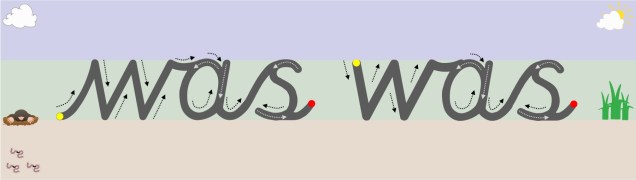
What are they finding difficult and how on earth do you write a continuous cursive z?


So you eventually get some handwriting practice sheets home or off the web. But no amount of time spent doing them seems to make much difference. It seemed to take longer to get them started than they spent practising handwriting. In fact they seemed worse because they were unhappy and frustrated with their own progress, so the more you try to push them the more resistant they become. Eventually you think there has to be a better way than this?

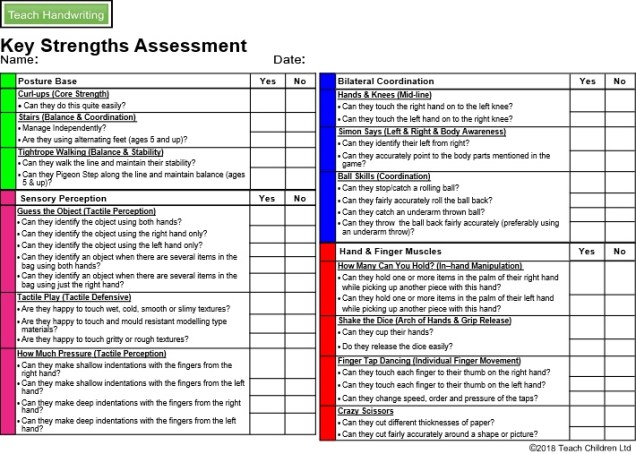
Doing more of what you are already struggling with is not always the answer. Handwriting is a complex skill to learn, so here is a checklist to help you:

Check their:

Supporting your child’s handwriting development can be fun using physical games and activities. To check if your child needs extra physical strength support or has other specific learning needs check out these areas of our website:

Check their:

  • Physical Strengths, Skills and Dexterity (Assessment): ly/1Aibiie
  • Specific Handwriting Difficulties : ly/1CyFA7k
  • Other Barriers to Learning: ly/1fLavUz

With the summer holidays coming up it is a great time for you to be able to observe and assess your child’s key physical strengths and skills. Armed with this knowledge you can play games and do activities which then help them to develop the strengths and skills which may be holding them back and making handwriting a difficult task to master.

The Quadrupod Grip for Handwriting

IMG_3288.JPG

A few weeks ago, we explained that this grip is classified as an efficient grip for handwriting.

I have to confess that I‘m not totally convinced.

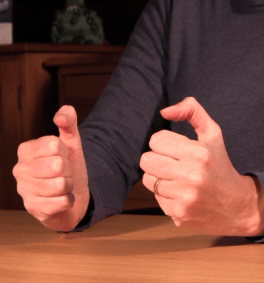
This grip may not put as much stress on the finger joints as other inefficient grips but it does restrict finger movements and therefore the fluidity of the handwriting.

The Quadrupod Grip is where the pencil is held between the top of the thumb, index and middle fingers and rests on the ring finger with the little finger slightly curled in.

I would normally see this as a developmental transitional pencil grip in younger children as they then move on to develop a Dynamic Tripod Grip, considered the most appropriate grip for handwriting.

Older children who have not moved on to develop the tripod grip may require more focused support in developing gross and/or fine motor skills. It is important to check that they are sitting correctly at the table and that the paper is positioned and tilted correctly for them. If they have a poor sitting posture it may be that extra work needs to be done on helping them to develop their gross motor skills. If this area seems fine then it could be that their fine motor skills require additional attention. See our ‘Key Strengths – Fit for Handwriting’ section for more information: http://bit.ly/1LABUGZ

It can be very difficult to get an older child to change their pencil grip especially if the old grip, like the Quadrupod Grip, is very similar to the new grip the Dynamic Tripod Grip. This is when it becomes difficult to know whether to continue to try and make a child change their pencil grip or not.

I think what we have to remember is:

“A pencil hold that provides speed, legibility is comfortable and will not cause harm to the joints of the hand over time. If a hold satisfies these criteria there is no need to change it”

(Benrow 2002, cited A Wagenteld, J Kaldenberg (co-editors), 2005: Foundation of Paediatric Practice for the Occupational Therapy Assistant; Pub: Slack Incorporated, ISBN-10:1-55642-629-1)

So if the child is complaining that their hand or fingers hurt or ache when they use the Quadrupod Grip, or that it is hindering their handwriting fluidity and speed, then we do need to support them in changing their grip. For some it may be more appropriate to introduce them to the Adaptive Tripod Grip (see last week’s blog) rather than trying to force them to use the Dynamic Tripod Grip.

We have to remember that every child is different and try our best to cater to their needs rather than our own preferences.

The Adaptive Tripod Pencil Grip for Handwriting

IMG_3237.JPG

The Adaptive Tripod pencil grip is identical to the Dynamic Tripod grip (still considered the most appropriate for handwriting) in that the pencil is held between the tip of the thumb and index finger and rests on the middle finger. The main difference is that the shaft of the pencil rests in the ‘V between the index and middle finger. This gives an open web space which allows the fingers to move freely so that a fluid handwriting style can be achieved.

As we explained two weeks ago, this grip is often more appropriate for children who have low muscle tone or hyper mobility of the finger joints. It can also benefit older children who:

  • Continue to hold a pencil too tightly
  • Hold the pencil lightly using just their fingertips (often writing using whole arm movements)
  • Hold a pencil with their thumb wrapped around and across the pencil and index finger.

Changing to the Adaptive Tripod grip is not a quick fix for children who have poor hand and finger strength. These strengths still need to be developed to make handwriting more comfortable.

How to form the Adaptive Tripod Grip for Right & Left Handed Writers

From the research I have done I cannot find any information that the grip needs to be adapted for left handed writers. So, our step by step guide applies to both left and right-handed writers and can be accessed using this link:  http://bit.ly/2MNVWzQ

The Sun is Out!

I know last week we said we would start to look at alternative pencil grip, but the sun is out! (Promise we will start the pencil grip series next week.)

The SUN is out and it is time for the water fights and games to begin.

How can water fights and games, where you can get wet, be handwriting homework?

It’s June, the weather is perfect, so why not set up water squirting games in the garden. The kids are waterproof and everything else will dry out, eventually!

You will be encouraging your child to develop their hand strength, co-ordination and eye tracking skills (all handwriting skills), while increasing your cool adult status.

Some fun water games:

  • Try setting up a target wall, using chalk to draw the targets.
    • How many of the targets can you hit with water squirted from a water pistol or squeeze bottle in a set time.
    • How many targets can be washed off.
  • Set up a skittles range.
    • Each skittle hit with water can be worth a certain number of points, or the distance of the skittles may affect their value.
    • A time trial game to hit all the skittles. If you are using plastic bottles as skittles try making some of them a little heavier by putting sand or dirt in them to make it a bit harder to knock them over.
  • Move the object race games.
    • A light toy/ball has to be moved by squirts of water over a distance.
    • A range of objects moved in to target areas to gain points.

The only limitation is you and your child’s imagination and trust me kids never tire of finding new ways to play with water (but then again neither do many adults)!

Homework has never been so much FUN!


Alternative Pencil Grips for Handwriting

cartoon pencil hold

We ran this article last year but the debate around what is an appropriate pencil grip for writing is still hotly contended. This is why in the past we have tried to stay clear of the topic and only ever provided information on the Dynamic Tripod Grip, which is still considered the most appropriate for handwriting.

However it has become increasingly evident that we need to look more carefully at alternative suitable efficient grips for handwriting. It is too easy for us to say that one particular grip is best and then plough on regardless and not really address the fact that one size, or in this case one method, does not fit all.

What is an efficient pencil grip?

“A pencil hold that provides speed, legibility is comfortable and will not cause harm to the joints of the hand over time. If a hold satisfies these criteria there is no need to change it”

(Benrow 2002, cited: Foundation of Paediatric Practice for the Occupational Therapy Assistant, 2005)

The above publication, and those listed at the end of the article, explains that there are three efficient pencil grips for handwriting:

  1. The Dynamic Tripod Grip is still the most appropriate grip for handwriting, for those with good fine motor skills, as it allows the fingers to move freely; so the writer can form the letters more smoothly.
    • The Tripod Grip has an open web space. The pencil is held between the top of the thumb and index finger and rests on the middle finger with the ring and little fingers gently curled in
  2. The Quadrupod Grip, this grip is a little more restrictive because the fingers cannot move as freely as they would if using the Tripod grip.
    • The Quadrupod Grip also has an open web space. The pencil is held between the top of the thumb, index and middle fingers and rests on the ring finger with the little finger slightly curled in.
  3. The Adaptive Tripod or D’Nealian Grip developed by the Belgian Neurologist Callewaert in 1963 (cited, Ann-Sofie Selin 2003) is a functional though not conventional grip for handwriting. This grip is often more appropriate to use with children who have low muscle tone or hyper mobility of the finger joints. It can also benefit older children who continue to hold a pencil too tightly, or who hold the pencil lightly using just their fingertips (often writing using whole arm movements), as well as those children who hold a pencil with their thumb wrapped around and across the pencil and index finger.
    • The Adaptive Tripod or D’Nealian Grip has a smaller open web space than the other two grips with the pencil held between the index and middle fingers, the tip of the thumb and the index finger on the pencil, which rests against the top section of the middle finger.

Over the next few weeks we will look more closely at each of these three grips, starting with what might be considered by some the most controversial The Adaptive Tripod or D’Nealian Grip.

Bibliography

Ann-Sofie Selin, 2003: Pencil Grip A Descriptive Model and Four Empirical Studies; Abo Akademi University Press

A Wagenteld, J Kaldenberg (co-editors), 2005: Foundation of Paediatric Practice for the Occupational Therapy Assistant; Pub: Slack Incorporated, ISBN-10:1-55642-629-1

Web-sites:

https://www.ot-mom-learning-activities.com/correct-pencil-grasp.html

https://www.otplan.com/articles/pencil-grasp-patterns.aspx

https://www.pediastaff.com/resources-pencil-grasp-patterns–may-2009


Identifying Poor Eye Tracking and Spatial Awareness Skills in Handwriting

Eyes

Eye tracking and spatial awareness difficulties can have a dramatic effect on a child’s handwriting ability.  Weak skills in these key areas make it difficult for children to form letters correctly (curves and lines often not joining to complete the letter shape), as well as being unable to appropriately space letters in words and words in sentences. Other poor presentation skills include being unable to write on lines and often missing lines out when following on with a sentence.

For more information on how to identify eye tracking and spatial awareness difficulties as well as activities to help support and develop these skills use these links:


Book an Eye Test

Optition

Children will often be unaware that what they see and experience may be different to what we or their friends are seeing. As parents it can be a real shock when your child says “isn’t that what you see?”, as unless the difference is extreme and has an obvious impact on them we can think everything is ok.

Visual difficulties not only affect a child’s ability to read but also their handwriting skills.

If you are not sure about your child’s vision then book an eyesight test, it could be your child is struggling because they need glasses, and they are now cool and don’t carry the stigma they used to.

For more Information check out our Eye Test info at the bottom of this page link:  bit.ly/1zLSfmv


Is your child finding it difficult to form their letters correctly?

letter size issues 8725

Our step by step flow chart will guide you through the possible causes. Start from the top and work through each stage, clicking on the boxes to take you to the relevant section of our website. Identify the possible reasons your child is finding it difficult to form their letters correctly and our suggestions on how to help them: http://bit.ly/2GoUBM9

For children to develop a good handwriting style it is important to learn how to form letters correctly to begin with as this makes the transition from single letter formation to joined letter handwriting much easier. This enables them to develop a speedy, fluid and legible handwriting style.

For parents this means finding out from your child’s school which letter font they are teaching so that you can support them more effectively at home. This may mean that you have to learn a new way of writing some letters. This also applies to teachers and teaching assistants. As the adults in the situation we have to accept that it is for us to make the changes. Just because something is different from the way we were taught, or do it, doesn’t mean it is wrong it is just different!

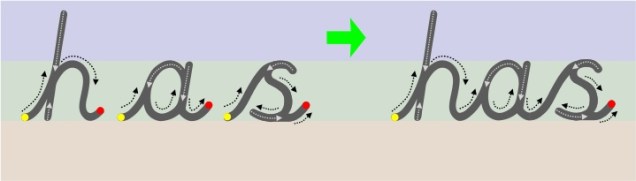
Our letter animations are not just to support children with their learning but also to provide parents and teachers (all adults really) with the knowledge and support to help children develop a consistent handwriting style.

Is your child reluctant to handwrite or has a poor writing speed?

pressure issues 8728

Our step by step flow chart will guide you through the possible causes. Start from the top and work through each stage, clicking on the boxes to take you to the relevant section of our website. Identify possible reasons for your child’s reluctance to handwrite or poor handwriting speed and our suggestions on how to help them: http://bit.ly/2K5kO4A

Tips for a Child who Actively Avoids, or is Reluctant, to do Writing or Drawing Activities

  • Best tip – Don’t force them, the more you push the more reluctant they will become.
  • Assess their physical ability.
  • If weaknesses are found play the games that will build the appropriate muscles groups.
  • Develop directional skills and shape formation through activities that don’t require a pencil so that they are still developing their motor memory skills which will help them later on when they do start to draw and write.
  • When ready, try timed drawing and writing activities after your child has had a good run around or physical activity (but not when they are tired).
  • Set up a good writing environment where they are sitting comfortably and without distractions, such as the TV.
  • Correct poor posture and keep the activity short. One minute of happy drawing is better than no minutes.
  • Try a ‘Playtime Drawing /Writing Session’ (see below).
  • End the sessions with a fun activity or treat.
  • This will take time, patience and encouragement, each improvement, no matter how small, needs to be recognised and positively praised.
  • Remember as your child’s skills develop so does their confidence to try, and their self-esteem, as they succeed where once they felt they failed.

How to Organise a Playtime Drawing/Writing Session

  • When ready, try timed drawing or writing activities after your child has had a good run around or other physical activity (but not when they are tired).
  • Set up a good writing environment where they are sitting comfortably and without distraction, such as having the TV on.
  • Correct poor posture and keep the activity short – up to 5 minutes initially. However, one minute of happy drawing/writing is better than no minutes.
  • After the drawing/writing play a non-drawing activity or game with your child. Make this break between 3 and 5 minutes long, ensuring your child knows when it will end (use a timer so they can see when they will need to stop)
  • Return to the original drawing/writing activity for up to another 5 minutes.
  • End the sessions with a fun activity or treat.

Tips on Running the Session

  • Start with 2 drawing/writing activities and then slowly increase the drawing/writing time and/or the number of activities and reduce the playtime slot times.
  • You could try to do a couple of these kind of sessions at different times during the day.
  • It may take time for your child to be comfortable with the sessions. You need to show a lot of patience and encouragement, each improvement no matter how small needs to be recognised and positively praised.
  • Remember as your child’s skills develop so does their confidence to try and their self-esteem grows as they succeed where once they felt they failed.

Tips on Sensory – Pressure Related Difficulties

Some children have a poor handwriting speed or just don’t want to try handwriting because of sensory pressure related difficulties and struggle to maintain and control the pressure required to handwrite.

Here are some additional tips to help support a child who is pressing down too hard with their pencil:

  • Focused games and activities can help to develop both the physical strength and sensory perception areas.
  • Make sure pencil grip is not too close to the tip of the pencil (check out our good grip section).
  • Play dough writing – flatten a large piece of play dough/clay on to a desk and using a pencil write or draw onto it. The idea is to create smooth lines, not torn ones, which pressing too hard will create. The advantage of this activity is it gives your child instant feedback on whether they are pressing too hard or not. When a good pressure has been found ask your child to try doing it with their eyes closed and talk through how their body feels when they are using the right amount of pressure.
  • Corrugated card – place some corrugated card under the writing paper – the aim is to try not to flatten the bumps in the card.
  • Tin foil writing board – wrap a piece of card in tin foil and place the paper on top, the aim is to not rip the foil when writing.
  • Carbon copies – use carbon paper to create an extra copy, start with two or three sheets of paper on top of the carbon paper then move to two and then one, so that your child starts developing an understanding of how much pressure is needed for a task and how that feels. Talk through with them how it feels as they need less pressure to create a copy.
  • Pattern work – look at and discuss light and dark line patterns and how to create them. Then using different writing tools ask your child to try and create their own. Talk through how it feels when they are making dark lines compared to faint/pale colour lines using the same pencil or crayon.

Here are some additional tips to help support a child who is Not pressing down hard enough with their pencil:

  • Focused games and activities can help to develop the physical strength and sensory perception areas.
  • Crayon rubbings – Place a piece of paper over the top of the object which is being used for the rubbing and then ask the child to rub the crayon on the paper to get a rubbing print; this will need the child to apply quite a lot of pressure. When a good pressure has been found ask your child to try doing it with their eyes closed and talk through how their body feels when they are using the right amount of pressure.
  • Wax drawings – rub a wax crayon all over a piece of paper then turn it over on to a plain piece of paper. Draw on the back of the wax crayoned paper and when finished lift and see another copy of the picture. The greater the pressure the more complete the hidden picture will appear.
  • Carbon copies – use carbon paper to create an extra copy, start with one sheet of paper on top of the carbon paper then move to two so that your child starts to develop an understanding of how much pressure is needed for a task and how that feels.
  • Use a softer pencil such as a B6 or B4 and slowly change the pencils so that they work up to a HB. Each pencil change will mean they have to exert a little more pressure to create the same line mark. B marked pencils are softer than H.
  • Pattern work – look at and discuss light and dark line patterns and how to create them. Then using different writing tools ask your child to try and create their own. Talk through how it feels when they are making dark lines compared to faint/pale colour lines using the same pencil or crayon.