What’s The Difference between Cursive and Continuous Cursive Handwriting Fonts?

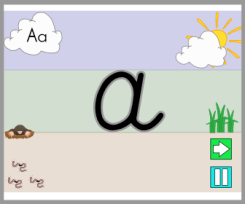
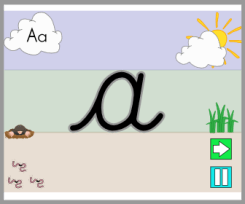
Cursive a Cloud   CC a Cloud

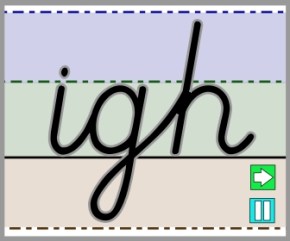
Many people think that Cursive is just short for Continuous Cursive. In fact they are two different handwriting fonts.

Cursive:

  • The letters start at different points.
  • The finishing points for all the letters is the writing line; except for, o, r, v and w, which have a top exit stroke.
  • The single letter formations are taught with just the exit strokes.

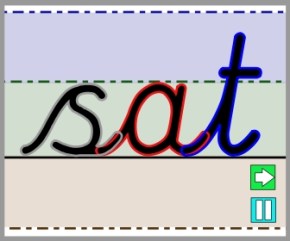
Continuous Cursive

  • The starting point for all the letters is the same; on the writing line.
  • The finishing points for all the letters is also at the writing line; except for, o, r, v and w, which have a top exit stroke.
  • The single letter formations are taught with the entry and exit strokes, this makes the transition from single letter formation to joined handwriting very straightforward and allows it to occur sooner.

Get free animations and worksheets for all our fonts letters and numbers by clicking through to the Letters page on our website:  http://bit.ly/2yJf27x

Play Ideas to Support Correct Letter Shape Formation

Letter Shape Play

Dated 12/10/17

Learning to handwrite does not start with pen and paper but through play, as children explore shape and motion (how the body moves) through their senses – touch, sight and body awareness. Play is such an important element of your child’s physical, emotional, social and academic development.

It is through play that you can really engage your child in learning how to correctly form letters (the start points, orientation, directional movements and finish points).

Our non-pencil – ‘Big to Small’ activities are an easy fun way to start developing these skills early on through play: http://bit.ly/1ASjnua

Young children love seeing their name so it is a great way to introduce letter formation; here are some other fun ideas:

  • This activity can be done indoors on large sheets of paper or using chalk on a path or patio (the beach is also a great place to do this). Write your child’s name very big and make a mark on each letter that represents a start point (an arrow showing the direction of travel can also help). Remember to use a capital letter for the first letter of their name and we would suggest lower case letters for the remaining letters. Use the letters as a track for racing cars or toys. If you make the letters big enough your child could walk, hop, jump or skip around the letters. To help them remember the letters, once they have finished a letter, encourage them to say that letter‘s alphabet name (NOT a sound the letter can make).
  • Collect stones, twigs, leaves, etc… Use them to make the letters of your child’s name. They may only make one or two of the letters, before making a hedgehog house, nest or den for their toys becomes more interesting, but this does not matter, it is all part of the adventure.
  • Feely bag games are a fun way to explore shape and form. Try placing the letters of your child’s name into a bag or box they cannot see into. It is useful to talk through the letter shapes beforehand so they can see them as they move them about in their hands; then place them in the bag. For some children it can help to have another set of the letters outside the bag to help them identify the shape they are handling in the bag. Again encourage them to use the alphabet name of the letter.
  • Play-dough, clay and Plasticine activities are great for developing hand strength for handwriting and learning how to form letter shapes.

Your child will love these sort of activities as they see it as just playing and they get your undivided attention. You will enjoy it as you are sharing quality time with your child helping them to develop more than just their letter formation ability but also their communication and social skills.

Learning through play is a powerful way of supporting your child’s development. So have fun and play!

Which to Teach First: Capital or Lower Case Letters?

Phonics Assessment Pages

Dated 28/09/17

Once your child has mastered pre-handwriting patterns they are ready to start learning how to form letters, numbers and symbols.

But where do you start?

Our personal view would be to focus on Lower Case letters.

Why?

  • One reason being that about 95% of what children write, and are exposed to, is in a Lower Case form and only 5% in Capital.
  • Lower Case letters are far less complicated, requiring fewer pencil lifts to complete the letters.
  • As both Lower Case and Capital letters require a child to form curved lines, a skill which most children have to practise, writing lower case letters is no more difficult than writing capitals.
  • In a young child’s writing all the letters are initially the same size, whether they are Capitals or Lower Case; it is part of the normal developmental path of handwriting. So the view that teaching Capitals letters is easier because they are bigger is not true.
  • Young children who have learnt mostly Capital letters first find it difficult to stop, as it is so ingrained into the memory, often using them half way through words and sentences. Even when they are older this inappropriate use of Capitals creeps back into their work especially if they are tired or concentrating hard on composing their work.

Your child’s first major achievement, in their eyes, is to write their name. So, although concentrating on Lower Case letters, teach them how to form the Capital letter of their name to get them excited about handwriting.

As they master the Lower Case letters introduce the remainder of the Capital letters. It is important that both are taught so that your child can develop a speedy, fluid and legible handwriting style.

Free Letter Formation Animations & Worksheets: http://bit.ly/1dqBYFm