The Best Pencil Grip for #Handwriting – Tripod Grip

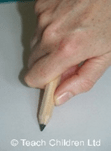
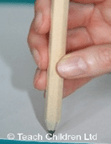
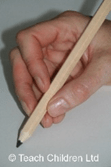
The Dynamic Tripod Grip is still the most appropriate grip for handwriting, for those with good fine motor skills, as it allows the fingers to move freely; so, the writer can form the letters more smoothly.

The following link will take you to the grip section of our ‘Parents’ section of the teachhandwriting.co.uk website where you will find information on the tripod grip for left and right-handed writer: https://teachhandwriting.co.uk/tripod-pencil-grip.html

The Drawbridge Flip Method is a simple way of helping a child pick up a pencil and hold it correctly in the tripod grip for handwriting. This can also be used as a whole class approach to support correct pencil grip development for handwriting.

Follow this link for an instructional video for both left and right-handed writers on how to use the Drawbridge Flip method: https://teachhandwriting.co.uk/whole-class-tripod-pencil-grip-teaching-ks1.html

Drawbridge Flip instructions:

  • Place the pencil on the table in front of the writing hand, so it forms a straight line up the table with the writing tip of the pencil pointing towards you.
  • Then using your thumb and index finger pinch the pencil either side of the shaft about 2 cm up from the tip for a right-handed writer and about 3 cm up for a left-handed writer. Dots or sticker may be placed on the pencil to help thumb and finger placement.
  • Pick the pencil up off the table and place the fingernail of the middle finger on to the pencil just above the tip.
  • Keep the ring and little finger gently curled in.
  • Push down with the middle finger so that the pencil moves up and over like a drawbridge, keep pushing until the pencil is supported in the cup (web of skin that joins the thumb, hand and index finger) and the pencil is resting on the inner edge of middle finger.
  • When writing, the end of the pencil will be angled towards the shoulder for right-handed writers and the elbow for left-handed writers.
The Five Stages of Pencil Grip Development

There are 5 developmental stages, that a child needs to go through, before they can successfully use a mature tripod grip. They need to work through each stage and as their hand, shoulder and arm strength and mobility increases so does their ability to move to the next developmental stage of the grip. Children develop through these grip stages over time with new experiences using different tools and drawing/writing mediums especially in the early years (0 to 4 years old).

You will find that young children will move between, or have slightly different versions of, the grips depending on the task or the effect they are trying to achieve. This is exactly what we want to happen.

Stage 1. Palmer-supinate grasp

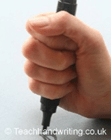
Holds the crayon/pencil in fist (whole hand) like a dagger. They use whole arm movements from the shoulder to mark-make. Due to this whole arm movement they prefer to work on a vertical surface.

Stage 2. Palmer or digital-pronate grasp

Holds a crayon/pencil with the palm of the hand facing down towards the paper. The crayon/pencil is held by all finger and the thumb. The movement comes from the shoulder and elbow. Again, due to the way the arm moves a vertical surface is preferred.

Stage 3. Four finger and thumb grip

Holds the crayon/pencil between the thumb and four fingers with the crayon/pencil nearly vertical up right position. Movement comes from the elbow and wrist.

Stage 4. Static Quadruped or tripod grip

Holds the pencil in very nearly in the correct position however the web space is narrower than it would be if held in a mature tripod grip. This means that the movement is coming from the wrist and large finger movements.

Stage 5. Mature/Dynamic tripod grip

This is traditionally considered the most appropriate pencil grip for handwriting. Holding the pencil between the thumb and index finger with pencil supported on the middle finger. The ring and little fingers are gently curled inwards. This give an open wide web space which means the movement comes from the fingers.

For more information on the five stages of pencil grip development click on the following link: https://teachhandwriting.co.uk/grip-development.html

Case Studies

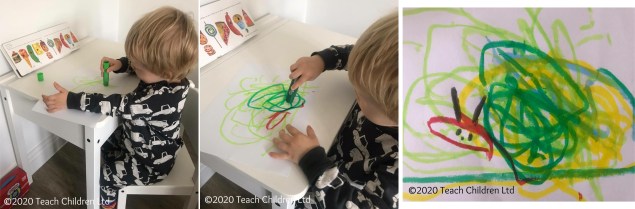
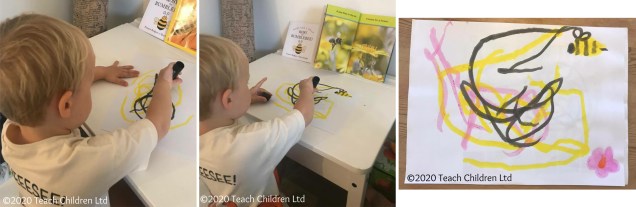
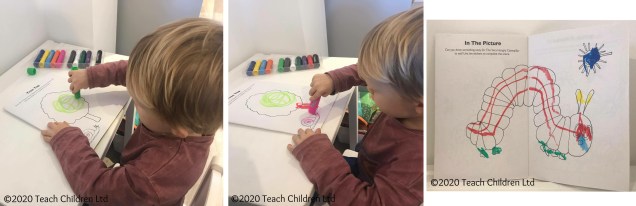
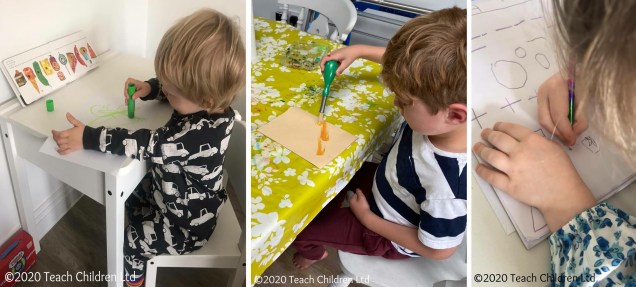
For example, young Billy here is using a variation of a stage 1 – 3 throughout these colouring activities:

In this example it might look as if Billy has gone backwards in his grip development but he has not, he has learnt that the grip he is using offers him greater control:

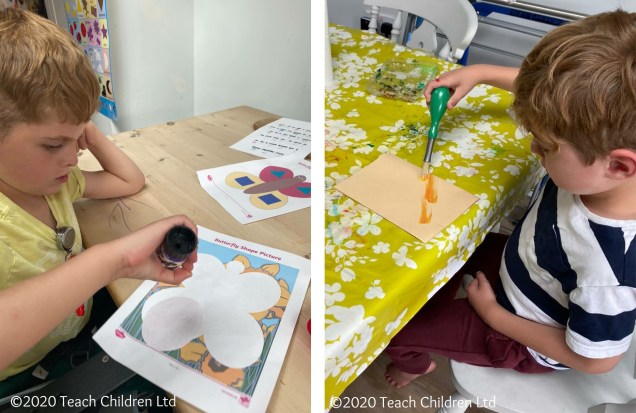
Young William here is using different variations of stages 2 and 3 for gluing and painting activities:

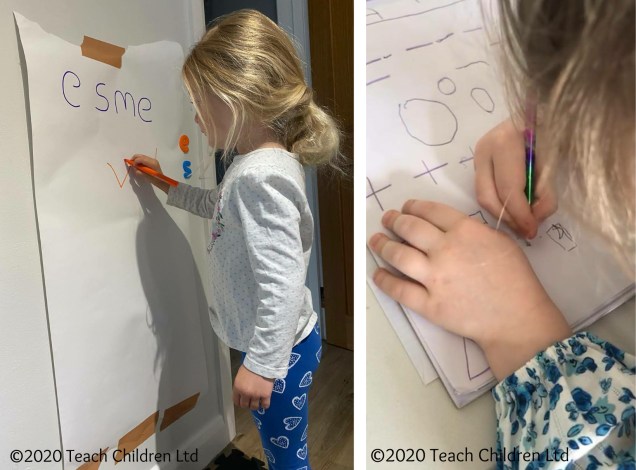
Esme and Issy have both moved to stage 4 although for some activities such as drawing/painting they may use a different grip, but that is what we would expect to see.

The Right Handwriting Tool for the Job!

As with learning any new skill the right tool at the right time can make a real difference to the whole learning experience as well as the outcome. Learning to handwrite is no different.

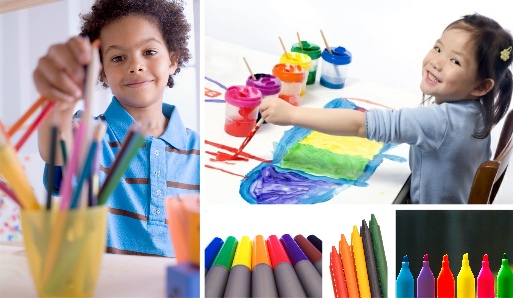
Young children due to their gross and fine motor skills ability require chunky shafted tools so that they can grip them effectively. This means they have a greater control over the tool and can achieve a more satisfactory outcome. If they are using a tool that is too thin, they will find gripping it difficult and have to keep changing their grip. They will have less control of the tool making the experience disappointing at best and discouraging at worst.

To help young children to store patterns and letter shapes formation into their motor memory it is important that the tools used provide a resistance rather than one that flows effortlessly over the writing/drawing surface. The greater the resistance the more the body can neurologically acknowledge (feel) the movement and help to send appropriate information to the brain.

Some of the best tools for young children to begin learning to draw patterns, shapes and correctly write letters:

  • Chalk on boards, walls or paths
  • Flip chart pens or large felt tips on course paper such as sugar paper
  • Using appropriately sized paint brushes on course paper or surfaces
  • Finger painting or finger drawing in sand, paint or cornflour mix
  • Finger tracing and then trying to draw the pattern, shape or letter straight afterwards.
  • Try chalking the shape or letter onto a blackboard and have the child use a damp sponge to wipe it off again (make sure the child starts in the correct place and moves correctly around the shape or letter to the correct finish point).
  • Appropriately sized crayons and pencils on course paper or card (non-shiny side of cereal boxes and corrugated card can be good fun and different to use).

As children begin a more formal approach to learning to form their letters correctly then appropriately sized and lead grade pencils are the best tool for the job. Pencil come in all widths, lengths and shapes. The key is to find the style of pencil which best suits the child and their stage of pencil grip development. Remember one size doesn’t fit all! When a child has learnt to join their letters and has a good and consistent letter size and places all their letters on the writing line correctly in relation to each other, then it maybe they are ready to be moved to pen. It is important before moving a child to pen that they are writing with speed (appropriate for their age) and fluidity (comfortable writing all the letters of the alphabet lower and upper-case correctly). A child whose handwriting is slow and laboured may need additional support and time before being moved on to pen.

The Best Type of Paper for Teaching Handwriting

Just as the writing tool used by your child changes as they develop, so does the paper they write on.

Informal Pre-handwriting Pattern and Initial Letter Development

If your child is just starting out on the handwriting adventure then any type of plain paper (no ruled lines) is considered the best option, as many children find it less restrictive.

Young children, due to the stage of their physical development, use large movements to draw (from the shoulder rather than the wrist) which often creates larger shapes and lines; you don’t want to restrict this movement as it can cause handwriting difficulties later. As their gross and fine motor skills develop so does their pencil grip and ability to draw and write at a smaller scale, moving more from the shoulder to elbow and wrist.

Formal Pre-handwriting Pattern and Letter Development

When your child is ready to refine their pre-handwriting pattern skills, or move on to forming letters, it is a good idea to use plain paper. The aim at this stage is to learn how to form the letters correctly, not size or neatness as that comes later (Remember, Big is Beautiful).

Before moving to lined paper, to help your child begin to appreciate letter proportions and positioning, paper with picture clues can be used.

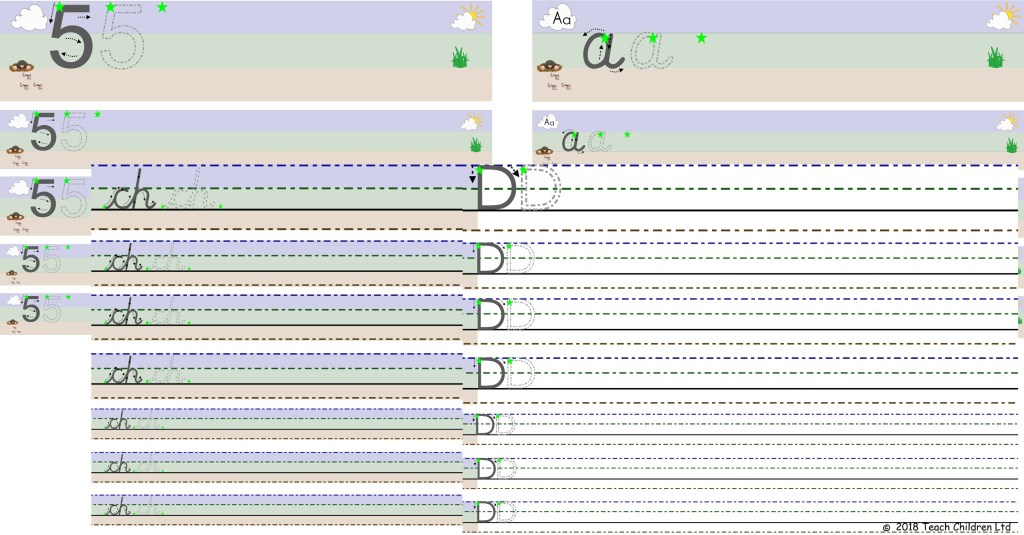
On our website the free writing paper and animations reinforce the idea of letter proportions and positioning by splitting the backgrounds into three colour zones to represent the sky, grass and earth. There are a number of reasons why this can be beneficial:

  • It can create a sub-conscious memory in your child’s mind of where particular letters sit in relation to others without the constraints of lines or obvious boundaries, especially as the picture can be any size. Children remember where to place the sun, grass or worms in their drawings; so why not letters?
  • It can be easier to talk through the formation of how a shape or letter is formed with pictorial and colour clues to guide and inform the direction of the movements required.     
  • As your child’s fine motor skills develop so the size of the picture/colour clues can be reduced to match their progress.

As your child’s fine motor skills develop it enables them to form smaller more refined versions of the letters and this is when it is more appropriate to use lined paper.

Warm up For Handwriting!

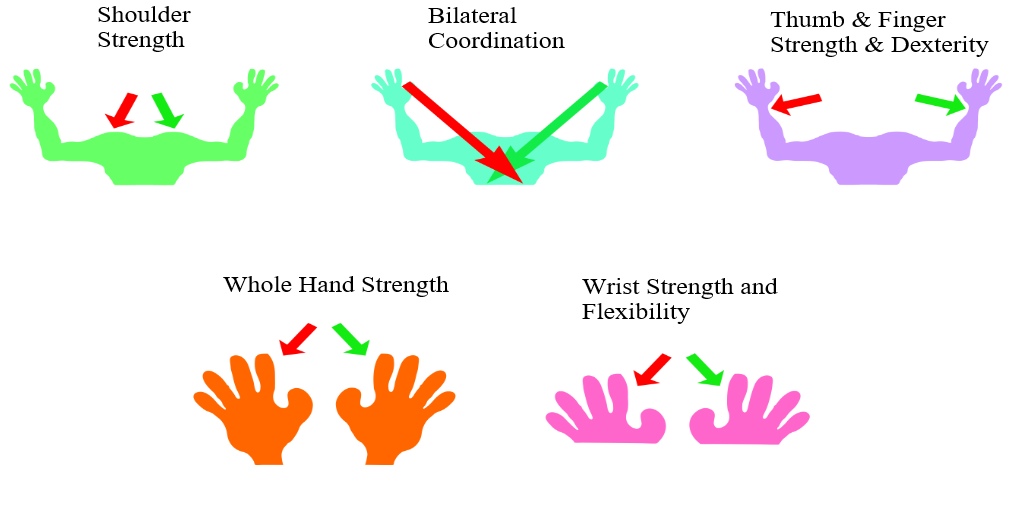
Warm Up Focus Areas

So, before you try to encourage your little darlings to sit and write, get them to do a few physical handwriting ‘Warm Up Exercises’.  Not only do they help to prepare the hands and fingers for the task ahead, they also help to release any tension that has built up. They are fun to do, which usually brings a smile and often laughter, an added tonic to any learning experience. The warm up exercises can be accessed through a number of ways:

The warm up exercises can be accessed through a number of ways:

  • Teachers through the content section for the Key Stage you are teaching:  

https://teachhandwriting.co.uk/handwriting-warm-up-exercises.html    

#Christmas Fun That Develops Handwriting Skills and No Pencil!

Handwriting skills don’t start with pencil and paper they begin with earlier play opportunities. Using play-dough type modelling materials is great for developing hand and finger strength, bilateral coordination, sensory perception and for learning and perfecting different grips for using tools.

Salt Dough

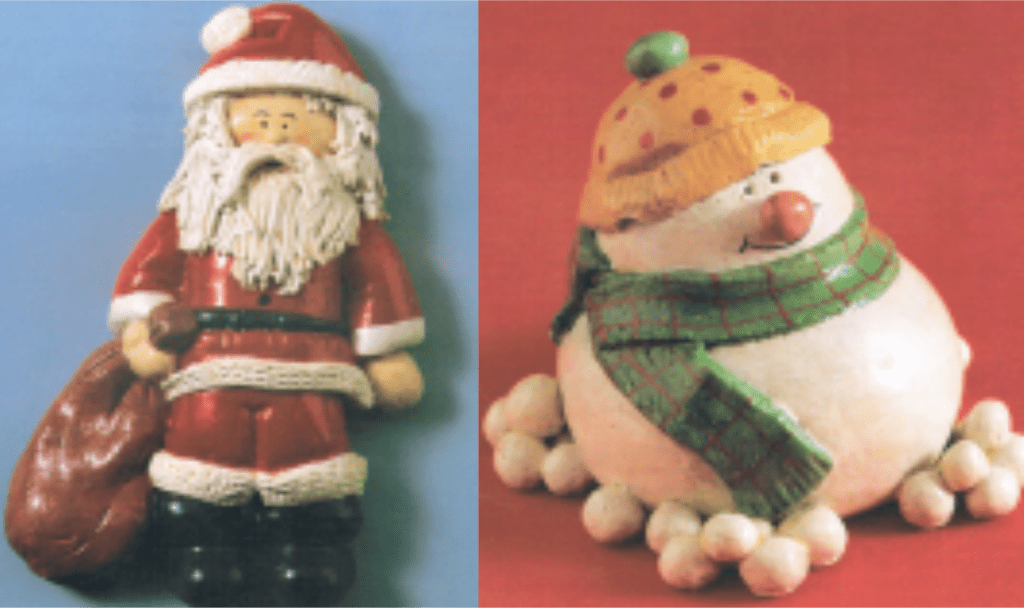
So, why not make some great salt dough Christmas gifts and tree decorations with your child. Not only will they melt the hearts of those who receive them but you will be developing your child’s fine motor skills (needed for good handwriting) while having fun, can’t be bad!

Go to our ‘More fun handwriting activities’ page (https://teachhandwriting.co.uk/more-activities.html ) in our Resources section for a salt dough recipe, that I have found good to use with children, and just download the ‘Salt Dough Modelling’ pdf.

#Christmas Finger Printing a Fun Way to Support Handwriting

Hand and finger printing can be a fun way of getting your child used to touching and using different textured mediums. The creative element can help some children to cope with, and learn to overcome, some sensory tactile defence difficulties. Being happy holding objects allows them to hold a pencil comfortably, leading to better handwriting.

Handwriting requires a child to apply the right amount of pressure to get the pencil marks of the letters on to the page. Too little pressure and the writing is often faint and wriggly in appearance (like a spider has walked across the page). Too heavy and the marks are very dark and can tear the paper; often the writing looks big, angular and laboured. Not being able to apply the correct pressure also affects how a child holds the pencil, which can cause the hand and fingers to tire more quickly, making writing tasks challenging.

Printing activities help your child to start to become aware of how to control the amount of pressure they use and the effect that this has on the quality of the work produced. Learning to control the amount of pressure exerted and how it feels can be very difficult for some children and it takes time and a range of experiences to develop these skills.

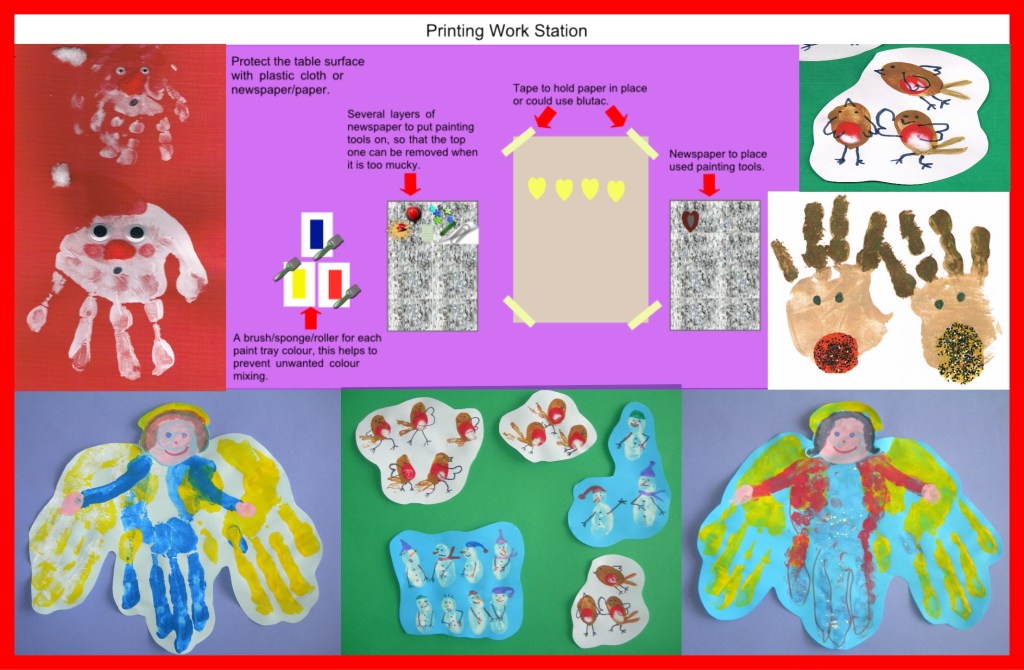
There are some fabulous printing ideas out on the internet; one of my favourite art resources is The Usborne Art Idea Books. Hand and finger printing can create some amazing artwork which can be used to make wonderful personalised Christmas cards, tags and paper.

Who could not be charmed by these fun thumb and fingertip snowmen or robins or delighted by a hand print angel?

For other useful tips on printing and setting up a printing work station, check out our ‘More fun handwriting activities’ in our Parents section under Learning Through Play: https://teachhandwriting.co.uk/more-activities.html

Why do young children love to draw on walls?

Young children love drawing on walls due to the stage of their physical development. They draw from the shoulder, rather than the elbow and wrist, using large arm movements. At this stage they prefer vertical drawing and painting surfaces as it allows a free range of movements. This is why they will write on walls (often newly decorated), not because they are meaning to be naughty but because it just feels comfortable and so more enjoyable.

Drawing and writing on a vertical surface is important at this stage as it helps young children develop the wrist strength and flexibility needed later to hold a pencil correctly for handwriting. Having the freedom to move more instinctively without restrictions means that a child is free to focus on other aspects, such as feeling the movement as they make shapes and gaining the confidence to have a go without fear of getting it wrong.

Case Study

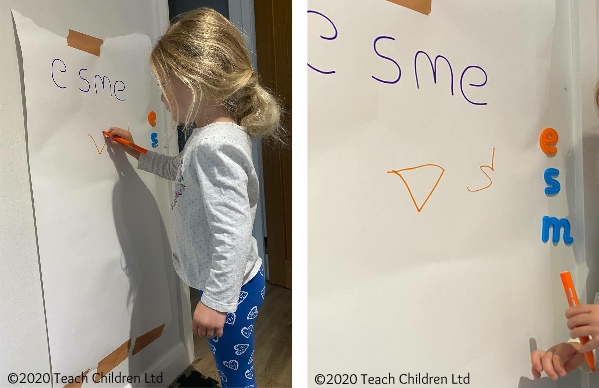
Esme at the age of 3yrs 9mths was very happy to draw (more scribbling) and colour sitting at the table but Mum was not quite sure how to move her on. So, the following idea was suggested; to tape some large pieces of plain paper up on a suitable wall for her to draw on with appropriately sized pens, crayons or chalks.

This was the response:

Message from Mum was:

“She’s loving this idea. She did a triangle and a ‘s’ all on her own with no encouragement.” As the day went on Esme revisited the drawing wall and later on that day this photo arrived: 

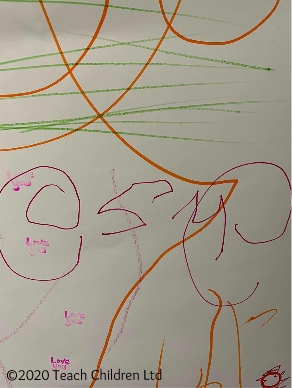
Message from Mum: “She just did her name.” This had been the first time she had done this.

An easel was then ordered!

The jump from a vertical to a horizontal writing surface can seem too great for some children; due to their stage of development. If they are still using some large whole arm and/or big elbow movements then they may benefit from the paper being positioned on a sloped board.

Tips for Supporting #Left-handed Writers

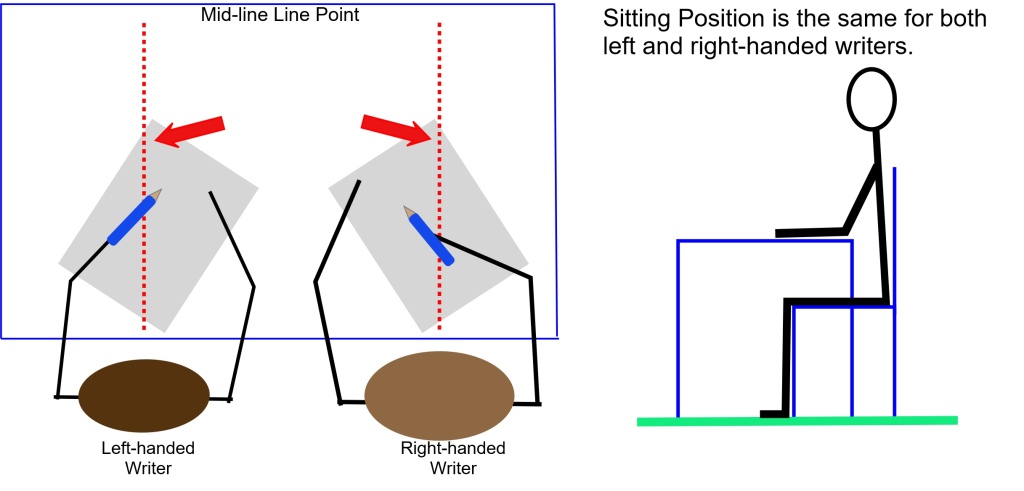
Surprisingly there are few differences when teaching left and right-handed children to handwrite. A left-handed child needs a slightly different pencil grip, and needs to hold the pencil slightly higher up the shaft, as well as a different paper position and tilt. Some left-handed children do find handwriting challenging to start with because they naturally want to draw straight lines right to left rather than left to right.

Check out our Left-handed Writers Page for more information and tips on how to support them: https://teachhandwriting.co.uk/left-handed.html

When to Introduce Joined Handwriting

Here at Teach Children we believe that a child is only ready to start learning to join their handwriting when:

  • They have learnt to form all 26 lower-case letters correctly
  • Letters are of a consistent and suitable size (not necessarily the perfect size, remember big is beautiful)
  • Letters are positioned appropriately on the writing line as well as in relation to one another.

Children generally begin to join letters between the ages of 6 to 7 years old, depending on the handwriting font style being taught. Those taught a continuous cursive font style from the beginning tend to join much earlier due to the nature of this font (for some by the end of their Reception Year).

Children do not need to be able to remember how to correctly form all their capital letters before they are taught how to join their letters. This is because capital letters never join to the lower-case letters in a word. However, for these children correct capital letter formation needs to be taught alongside the introduction of letter joins.

The ultimate aim is for a child to develop a good handwriting style; which means;

  • They can produce and maintain a good speed
  • Have a fluid hand movement that is comfortable
  • Letters are of a consistent and appropriate size, positioned correctly
  • Handwriting is legible (so others can read it easily).

For some children (mainly SEND pupils) this may mean that they will always print or use a single letter form of writing as learning to join is just not appropriate. But that does not mean they will not comply with the bullet points above.