Stage 2 to #Handwriting Success – Single Letter Formation

Last week we explained that pre-handwriting patterns are the first stage of learning to handwrite. Once a child has mastered theses, they are ready to start learning how to form letters.

But where do you start?

Our view is to focus on lower-case letters first and only the capital letters for the first letter in a child’s, examples: Peter Rabbit, Sally Green, George Blue or Mary Shell.

Why?

  • One reason is that about 95% of what children write, and are exposed to, is in a lower-case form and only 5% in capital.
  • Lower-case letters are far less complicated, requiring fewer pencil lifts to complete the letters.
  • As both lower-case and capital letters require a child to form curved lines, a skill which most children have to practise, writing lower-case letters is no more difficult than writing capitals.
  • In a young child’s writing all the letters are initially the same size, whether they are capitals or lower case; it is part of the normal developmental path of handwriting. So, the view that teaching capitals letters is easier because they are bigger is not true.
  • Young children who have learnt mostly capital letters first find it difficult to stop, as it is so ingrained into the memory, often using them half way through words and sentences. Even when they are older this inappropriate use of capitals creeps back into their work especially if they are tired or concentrating hard on composing their work.

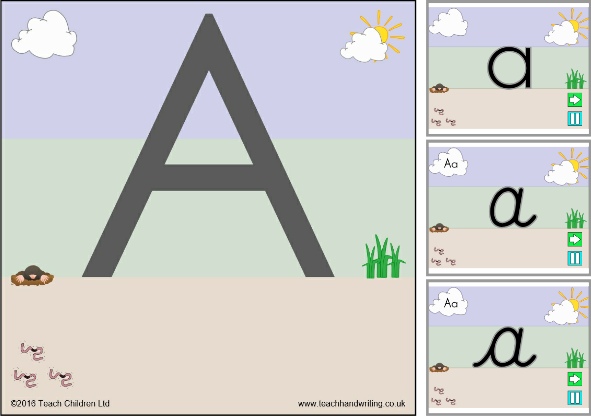
Have you got your Free Letter Formation Animations & Worksheets?                                                                      For Teachers: https://teachhandwriting.co.uk/key-stage-1-handwriting-routes.html

For Parents: https://teachhandwriting.co.uk/parents.html

A child’s first major achievement, in their eyes, is to write their name. So, although concentrating on lower-case letters, teach them how to form the capital letter for the first letters of their name to get them excited about handwriting.

As they master the lower-case letters introduce the remainder of the capital letters. It is important that both are taught so that a child can develop a speedy, fluid and legible handwriting style.

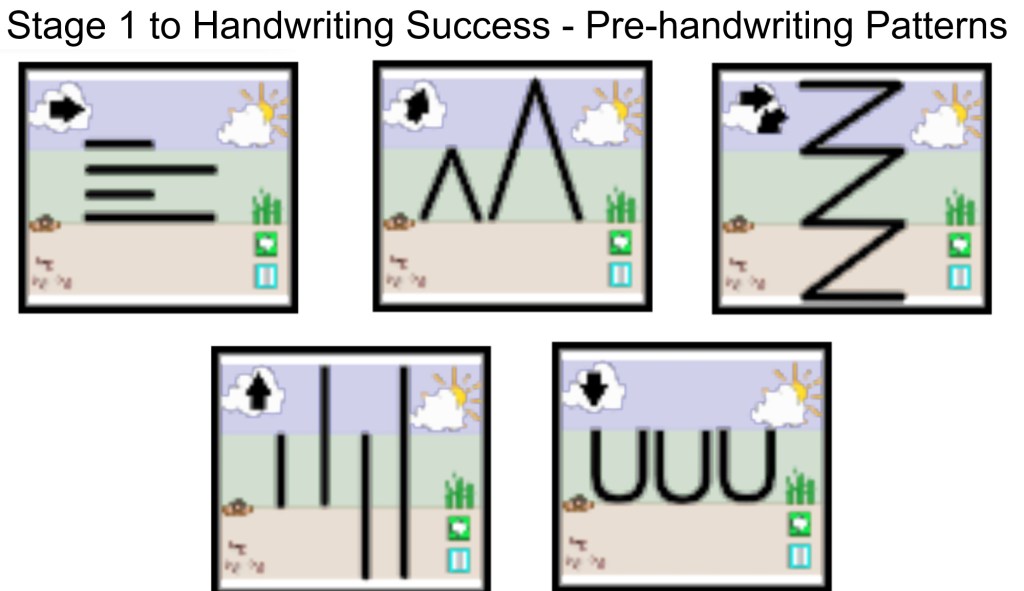
Stage 1 to #Handwriting Success – Pre-handwriting Patterns

Pre-handwriting patterns are the first stage in supporting a child to handwriting success. They help the child to learn the shapes and directional pushes and pulls required to form letters. All letters are a combination of these shapes and lines.

Young children can start to learn these patterns through their play, long before they are ready to pick up a pencil, moving toys back and forth across the floor or whirling them around in the air. To a child it is just play and fun, but you are doing something far more powerful and constructive by helping them to develop the motor memory patterns and directional movement skills they will need for handwriting.

Later, as their coordination and gross motor skills develop, they make more controlled and varied movement patterns in their play. Changing directions, speed and size are all prerequisite skills needed for learning pre-handwriting patterns.

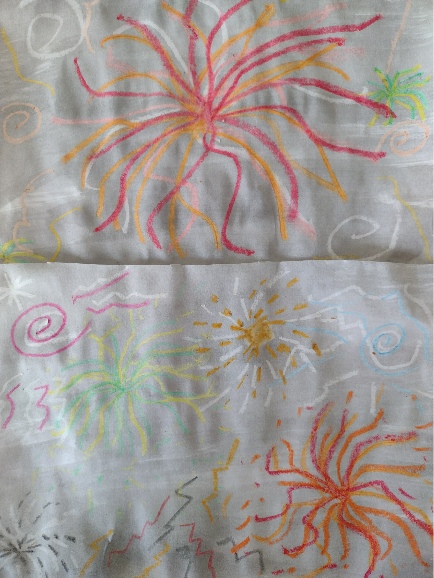
These handwriting patterns do not need to be taught as worksheet activities (though they do help to perfect shape and pattern formation), drawing pictures and patterns in sand, paint and with other writing tools are all fun ways to practise.

Teaching the handwriting patterns in groups helps to further develop the specific movements (pushes and pulls) required to form them and help commit them to the motor memory. A child can then recall these motor memories to support them as they begin to form letters.

Pre-handwriting patterns that encourage a child to move their pencil from left to right are very important for left-handed writers. They need to be taught this so that they can make the cross motion in the H, T, J, G and I from left to right, as their natural instinct is to go from right to left. If this is not corrected when writing E and F the cross lines will not be “anchored” to the letter.

Once the handwriting patterns have been mastered a child will have the confidence and skills base necessary to start forming letters, numbers and symbols.

Have you got your Free Pre-handwriting Pattern Animations & Worksheets?

For Teachers: https://teachhandwriting.co.uk/pre-handwriting-patterns.html

For Parents: https://teachhandwriting.co.uk/patterns.html

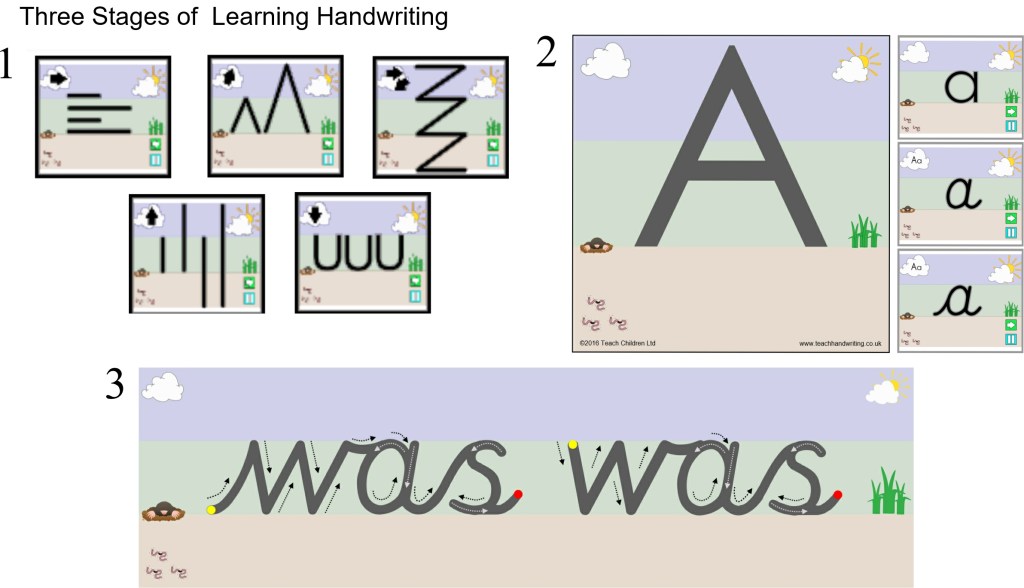
The Three Stages to Learning Handwriting

There are three distinct stages for children to progress through to develop a good handwriting style:

Stage 1 – Pre-handwriting Patterns

Pre-handwriting patterns support a child towards handwriting success. They help the them to learn the shapes and directional pushes and pulls required to form letters. All letters are a combination of these shapes and lines.

Stage 2 – Single Letter Formation

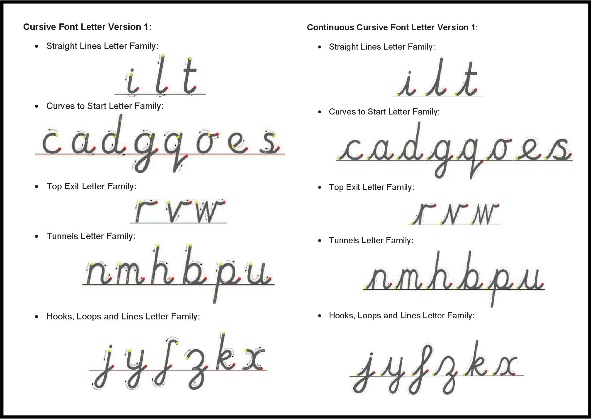
For children to develop a good handwriting style it is important to learn how to form the letters correctly.

Beginning with lower-case letters and only the capital letters for the first letter in a child’s name, examples: Peter Rabbit, Sally Green, George Blue or Mary Shell.

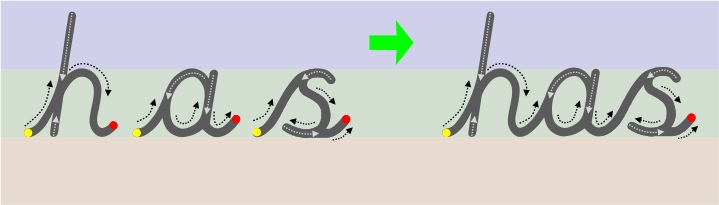
Learning the correct lower-case letter formation also makes the transition from single letter formation to joined letter handwriting much easier.

Stage 3 – Joined Handwriting

Learning to join letters for handwriting enables children to develop a speedy, fluid and legible handwriting style.

Why Placement (Preposition) and Directional Vocabulary is Important!

Teaching your child the vocabulary related to placement (preposition) and direction is import in supporting them to understand and follow instructions, as well as sharing information themselves, such as; ‘put your cup on the table’ or to say ‘teddy in car’.

We also use this placement (preposition) and directional language to explain how to draw shapes, patterns and write letters and numbers.

We have created three sets of picture cards and games to help you support your child in developing and using positional (preposition) and directional vocabulary.

You can find these free resources on our Phonics website by following this link: https://www.teachphonics.co.uk/phonics-resources.html

You can find these free resources in Parent section of the Teach Handwriting website by following this link: https://teachhandwriting.co.uk/more-activities.html

What are prepositions?

A word used with a noun or pronoun to show place, position, time or means, e.g. at home, in the hall, on Sunday, by train.” Definition from Oxford School Dictionary, third edition 2002.

Here are just some preposition and directional phrases you might like to use:

On the … On top of the … Above the … Over the…

Under the… Below the … Beneath … Underneath …

Behind the …

In front of the…

Next to …Beside the … On the right of … To the right of … On the right-hand side … On the left of … To the left of … On the left-hand side… Before the … After the …

In the…  Inside the …

Out of the … Outside of the …

Between the … In between the … In the middle … In the center …

Going up the ….  Going down the … Going towards the… Going away from …

How to get your child interested in drawing and colouring!

Not all children enjoy drawing and colouring and it can be difficult to encourage them. There are a number of reasons why some children seem reluctant to draw, paint or colour. For instance, some will not like the smell of the paint or crayons, while others may find the pencils, brushes or crayons too thin, long or heavy. Others may be reluctant due to past negative experiences. It can be tricky to work out exactly why a child doesn’t want to draw or write.

Here we have some tips and ideas that may help you to get started:

Paper Size– Some children like large pieces of paper to work on while others can be daunted by the prospect. Start off by having a range of paper sizes and colours for your child to choose from, this way you can find out which size of paper they prefer to work on.

Vertical surface – Having the paper pinned vertically on a drawing board or wall may also help encourage your child to have a go at drawing more than if the paper is laid flat on a table.

Drawing & Writing Tools – Have a range of pencil and crayon thicknesses, lengths and colours so that your child can choose the ones they feel most comfortable using. Try to make sure that the pencils are sharp enough to be used effectively as picking up and using a blunt pencil can be a negative experience which can turn a child off drawing or writing.

You could try using different drawing tools to start with such as chalks or special glass pens (which are great fun and designed to clean off easily).

Draw Together – Before you start drawing think about the kind of things that will interest your child, for instance drawing a train may be ideal for your little boy but not necessarily for your little girl. Use simple shapes to draw the objects so that over time your child will be able to copy so they too can draw successfully the train, cat or car. Practise by yourself so that when you are doing the drawing with your child it comes easily to you so that you can talk through what you are doing.

We have created some new drawings using simple shapes which you may find helps you to get started. Follow this link and scroll down the page a little you will find them under the ‘Activities to help hand development’:  https://teachhandwriting.co.uk/more-activities.html

Tips:

Pick a time and place where you can start to draw in the same room/area as your child is playing. Start off by just sitting and drawing without actively involving your child. It is surprising how often a child will come to checkout and ask you what you are doing. They may just stand and watch for a while and go back to playing, just carry on and complete the picture without them. Leave the picture for them to see, you could let them know you have drawn it for them and have a little chat about it.

Handwriting Begins with Mark Making & Simple Drawings

Young children’s first experience on the handwriting journey is through mark-making and simple drawings, whether it is with finger-paints, writing in sand or with pencils and crayons.

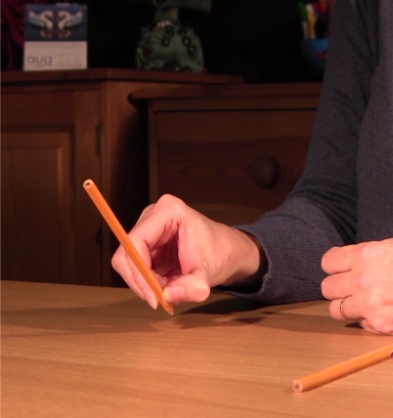
From about the age of 2, children start to move from a simple grasping (primitive) grip to one that secures the writing tool between the fingers and the thumb. In the early stages of mark-making and drawing young children will try different grips and holds, which is part of their normal development for handwriting and drawing.

As young children’s body (gross motor skills), hand strength and dexterity (fine motor skills) are developing they need a range of pencil, crayon and paint brush thicknesses. Young children need the thicker drawing tools as they can grip them more easily, helping them to mark-make. If the pencil is too thin, they find it difficult to grasp and have little control over it, making the drawing experience unsuccessful, which can lead to frustration and discourage them from trying again.

Due to the stage of their physical development young children use large movements to draw (from the shoulder rather than the wrist) which often creates larger shapes and lines.

During the early stages a vertical drawing and painting surface is important as it allows the child the freedom of movement to fully explore their mark-making potential. It also helps young children to develop the wrist strength and flexibility which they will need later to hold a pencil correctly for handwriting.

Using plain paper and surfaces is considered best for young children as they find it less restrictive.

It has been widely acknowledged that a child who is forced to hold a writing tool using the dynamic tripod grip, before they are developmentally ready, can be turned off engaging in the drawing/writing process as well as developing a poor pencil grip later on. Remember some children do not develop the ability to use the dynamic tripod grip until the age of 5/6 years old.

As a child’s gross and fine motor skills develop so does their pencil grip and ability to draw and write at a small scale moving more from the elbow and wrist and progressing through the grip stages.

For more information on pencil grip development use this link: https://teachhandwriting.co.uk/grip-development.html

The Importance of Using Letter Names for Developing Handwriting, Phonics and Reading Skills

Here at Teach Children we have always promoted the importance and power of teaching the correct letter names to begin with; through our Teach Handwriting website, Schemes and Teach Phonics website. Unfortunately, some schools, teacher and parents still seem to be concerned that this is not consistent with the teaching of phonics, which is just not correct.

Learning the unique letter names of the alphabet is a pre-phonics skill; as well as an early learning goal. It has to be remembered that a letter is a shape which only represents a sound when it is placed within a word or sentence (has a context). Also, a letter or combination of letters can represent more than one sound and so the only unique way of identifying alphabet letters when we talk about them is to use their names.

It is important to remember that just because a child can correctly recite the ‘Alphabet’ song it does not mean they know the letters of the alphabet. It is surprising how many children can do this but when shown letters from the alphabet cannot name them at all. They may be able to tell you the sound the letter makes but have no idea of the letters name.

Learning the correct letter names helps to reinforce that when talking about the letter ‘a’ (ay) for example it has a set shape regardless of the sound that it will be representing in the word. This further supports children’s handwriting development as the communication of your requirements is unambiguous.

Teaching the correct letter names is important when supporting handwriting as this can in turn affect a child’s phonics understanding later on. For example, it can seem very easy when explaining to a child which letter to write when they ask which one is making a ‘kuh’ sound in a word such as cat to say a ‘curly kuh’. There is no such letter in the alphabet called ‘curly kuh’ it is the letter ‘c’ (cee). By adding the ‘kuh’ sound to the letter it reinforces incorrect phonics knowledge. The letter ‘c’ does not make a ‘kuh’ sound in words such as: city, circle, cycle and centre.

Some children will then only ever refer to the letter ‘c’ as ‘curly kuh’ and the letter ‘k’ as’ kicking kuh’. As I say these are not letter names of the alphabet and also devalue the power of phonics at the same time.

How can the education establishment get hot under the collar about not using the correct terminology in the teaching of English in schools such as: phonemes, graphemes, digraphs, modal verbs etc… yet still refer to the letter’s ‘c’ and ‘k’ as ‘curly or kicking kuh’!

Phonics is a powerful decoding and encoding tool. However, so is the alphabet letter naming system. Both need to working side by side to support our children, especially in those early years of their educational journey.

The English phonic system is very complex but this is why our language is so rich. Young children need to use letter names as an additional tool, as it takes many years for them to be introduced to the more complex phonics coding system. Alphabet Name animation (scroll to the bottom of the page): https://www.teachphonics.co.uk/phonics-graphemes.html

Back to School – Ways to Support Your Child’s Pencil Grip Development

After such a long break from school it is good to take some time to check your child has not slipped back into some old, poor pencil grip habits.

Here is a recap of the things which may help them if they are still finding it difficult to form and maintain an appropriate pencil grip.

Remember it is important that you do not force a child to use the tripod grip if they are not developmentally ready. Just because they are starting school doesn’t mean they are ready to hold a pencil in the tripod grip for handwriting.

Have they reached the appropriate stage in their pencil grip development?

Every child develops at a different time and pace; find out which stage of development your child is at: https://teachhandwriting.co.uk/grip-development.html  

Have they been taught, & do they understand, how to form a Tripod pencil grip?

It may have been explained to them, but that does not mean your child has understood. ‘Drawbridge Flip’ videos may help them to learn more easily how to form a tripod grip for handwriting: https://teachhandwriting.co.uk/teaching-tripod-pencil-grip.html

You may find our Pencil Grip Frequently Asked Question page helpful:  https://teachhandwriting.co.uk/grip-faq.html

Are they left or right-handed?

If they are of school age and do not have a clear hand dominance this can make it difficult to develop a good pencil grip. Our hand dominance information may help you here: https://teachhandwriting.co.uk/hand-dominance.html

Is your child left-handed? 

If your child is left-handed for writing then you may find this link useful: https://teachhandwriting.co.uk/left-handed.html

You may find our Hand Dominance Frequently Asked Questions page helpful: https://teachhandwriting.co.uk/hand-dominance-faq.html

Drawing – a Pre-skill for Handwriting

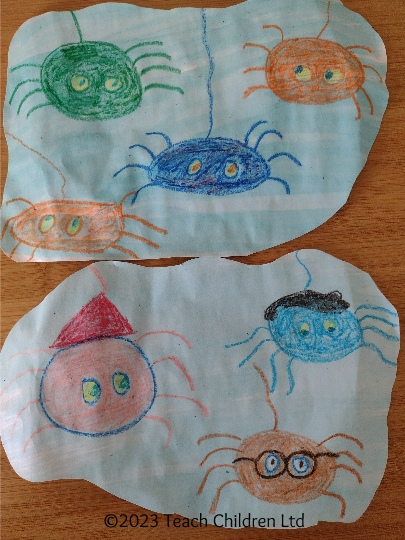
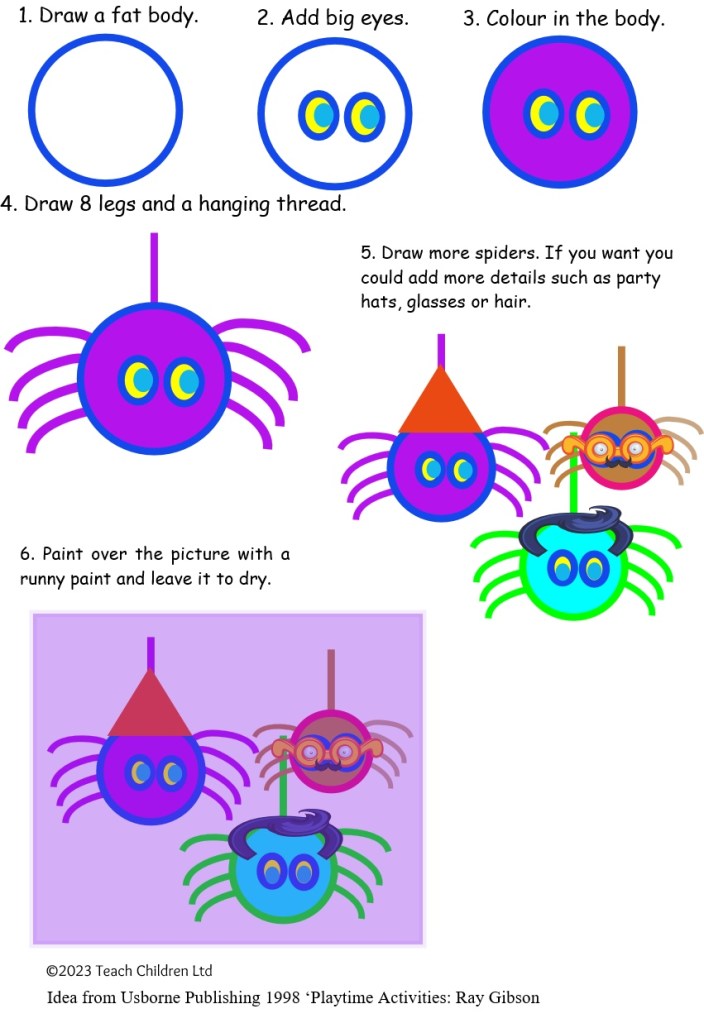
Drawing pictures is a great way to help your child develop their pre-handwriting strokes and shape forming skills. It is amazing how, by using these simple shapes, you and your child can create fantastic picture.

Try using basic shapes such as circles, rectangles and triangles to begin with and then add some swirls, curves and spiral to give extra detail.

Summer Fun – Think more Play, Play and Play!!!

The last thing you and your child probably want to think about right now is handwriting or phonics and getting ready for next term; and quite right too!

So, don’t think about it in the conventional way of practise, practise and practise.

Think more play, play and play!!!

Children learn so much through just playing; developing physical, mental, communication and vocabulary strengths and skills, which all support them at school and with learning.

Once introduced to a new game or activity children will very often take it and make it their own, making new rules and introducing extra characters or challenges.

The skill as a parent is remembering to let go of your preconceived ideas about how a game should be played and letting your child take the initiative.

If you provide the opportunities, it is amazing how they will take on the challenge of inventing a new game or (in their eyes) improving an existing one.

This does not have to cost a penny; use the toys they already have or make games using empty plastic bottles or cardboard tubes.

The following types of play can support and develop the key strengths and skills your child needs for handwriting and you have not had to mention school or homework.

  • The local play park is a fantastic free resource; running, jumping, crawling and climbing can all be encouraged. If your child is a little reluctant then it may well be that they are unsure how to do some of these activities. Explain when jumping that they needed to land on their feet and bend their knees as they land. Start small and as their confidence grows so does the height or distance they jump. Climbing can be scary for some children so again explain how to climb, moving one hand or foot at a time so that there are always three other points of contact.
  • If you are lucky enough to have a garden then mud play is messy but so much fun, it can be contained in a small area and will not only make you a cool adult but, if you join in, it will knock years off you (have a go, it is a great free therapy session).
  • Skittle games are always fun, extend the activity by decorating the skittles (plastic bottles or cardboard tubes) using anything from crayons, paint or even dress them up as people or animals.

Water, water everywhere!  

The SUN is meant to be out which makes it time for the water fights and games to begin.

It is August so the weather should be perfect, so why not set up water squirting games in the garden. The kids are waterproof and everything else will dry out, eventually!

How can water fights and games, where you can get wet, be handwriting and phonics homework?

You will be encouraging your child to develop their hand strength, co-ordination and eye tracking skills (all handwriting skills). However, these games are also fantastic for developing sound and word awareness skills.

Try mimicking the sounds that the water makes as it drips on to the floor or hits the targets; use directional language to support your child’s aiming skills; describe how the objects move when hit: bouncing, rolling or flying and talk through the emotions evoked through playing the games.

As well as supporting your child in developing a whole range of physical and language skills you will also increase your cool adult status.

Some fun water games:

  • Try setting up a target wall, using chalk to draw the targets.
    • How many of the targets can you hit with water squirted from a water pistol or squeeze bottle in a set time.
    • How many targets can be washed off.
  • Set up a skittles range.
    • Each skittle hit with water can be worth a certain number of points, or the distance of the skittles may affect their value.
    • A time trial game to hit all the skittles. If you are using plastic bottles as skittles try making some of them a little heavier by putting sand or dirt in them to make it a bit harder to knock them over.
  • Move the object race games.
    • A light toy/ball has to be moved by squirts of water over a distance.
    • A range of objects moved in to target areas to gain points.

The only limitation is you and your child’s imagination and trust me kids never tire of finding new ways to play with water (but then again neither do many adults)!

Homework has never been so much FUN!