Handwriting and Phonics

The New Department of Education (UK) Writing Framework; July 2025.

Handwriting and Phonics

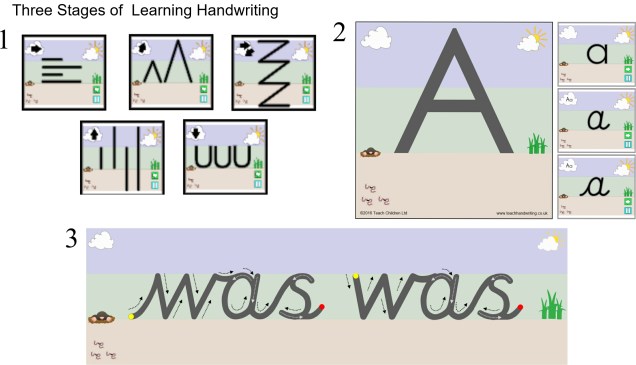
In the past EYFS have always explained their concerns that the Teach Handwriting Scheme for Foundation Stage does not follow their phonics schemes handwriting order.

The new writing framework has addressed this stating:

“The order in which letter formation is taught in handwriting lessons differs from the order in which phonemes are introduced in a phonics programme. This is because all phonics programmes teach letters in an order that will generate the most words for reading. Handwriting programmes, in contrast, sequence teaching by grouping letters with similar formation. Pupils should be taught both phonics and handwriting consistently and systematically, in line with the programme for each.”

 Department of Education; The writing framework: July 2025; page 37; https://www.gov.uk/government/publications/the-writing-framework

I could have cried with joy, as this is what we have always said.

New Writing Framework – Department of Education UK

To all our Teach Handwriting Scheme schools.

The Department of Education ‘s new writing Framework had me jumping for joy!

At last, they have recognized what an important role teaching handwriting really plays.  Everything we have promoted since 2012 in our website, blogs and since 2016 in our Teach Handwriting schemes for schools is there. 

So, you don’t have to worry, just keep doing what you are doing, using the Teach Handwriting Scheme.

And as our Handwriting Scheme is a one-off payment there is no annual cost to you! WIN, WIN.

“The importance of handwriting in developing pupils’ writing cannot be overstated. Fluent handwriting is a significant predictor of positive writing outcomes, while a lack of such fluency can constrain pupils….”

Department of Education; The writing framework: July 2025; page 31; https://www.gov.uk/government/publications/the-writing-framework

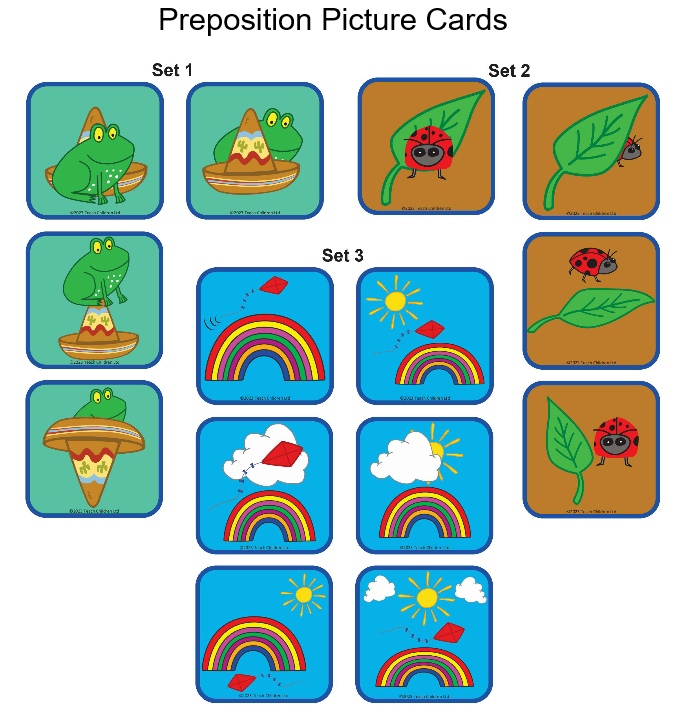
Why Placement (Preposition) and Directional Vocabulary is Important!

Teaching your child the vocabulary related to placement (preposition) and direction is import in supporting them to understand and follow instructions, as well as sharing information themselves, such as; ‘put your cup on the table’ or to say ‘teddy in car’.

We also use this placement (preposition) and directional language to explain how to draw shapes, patterns and write letters and numbers.

We have created 3 sets of picture cards and games to help you support your child in developing and using positional (preposition) and directional vocabulary.

You can find these free preposition flash card resources in Parent section of the Teach Handwriting website by following this link: https://teachhandwriting.co.uk/more-activities.html

What are prepositions?

A word used with a noun or pronoun to show place, position, time or means, e.g. at home, in the hall, on Sunday, by train.” Definition from Oxford School Dictionary, third edition 2002.

Here are just some preposition and directional phrases you might like to use:

On the … On top of the … Above the … Over the…

Under the… Below the … Beneath … Underneath …

Behind the …

In front of the…

Next to …Beside the … On the right of … To the right of … On the right-hand side … On the left of … To the left of … On the left-hand side… Before the … After the …

In the…  Inside the …

Out of the … Outside of the …

Between the … In between the … In the middle … In the center …

Going up the ….  Going down the … Going towards the… Going away from …

Learning Through Play – Letter Shapes

Learning to handwrite does not start with pen and paper but through play, as children explore shape and motion (how the body moves) through their senses – touch, sight and body awareness. Play is such an important element of your child’s physical, emotional, social and academic development.

It is through play that you can really engage your child in learning how to correctly form pre-handwriting patterns and letters (the start points, orientation, directional movements and finish points).

Our non-pencil – ‘Big to Small’ activities are an easy fun way to start developing these skills early on through play: https://teachhandwriting.co.uk/big-to-small.html

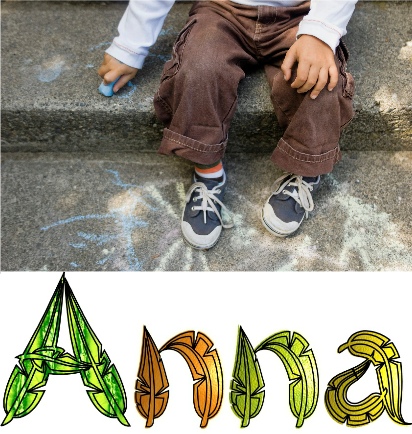
Young children love seeing their name so it is a great way to introduce letter formation; here are some other fun ideas:

  • This activity can be done indoors on large sheets of paper or using chalk on a path or patio (the beach is also a great place to do this). Write your child’s name very big and make a mark on each letter that represents a start point (an arrow showing the direction of travel can also help). Remember to use a capital letter for the first letter of their name and we would suggest lower-case letters for the remaining letters. Use the letters as a track for racing cars or toys. If you make the letters big enough your child could walk, hop, jump or skip around the letters. To help them remember the letters, once they have finished a letter, encourage them to say that letter’s alphabet name (NOT a sound the letter can make).
  • Collect stones, twigs, leaves, etc…  Use them to make the letters of your child’s name. They may only make one or two of the letters, before making a hedgehog house, nest or den for their toys becomes more interesting, but this does not matter, it is all part of the adventure.
  • Feely bag games are a fun way to explore shape and form. Try placing the letters of your child’s name into a bag or box they cannot see into. It is useful to talk through the letter shapes beforehand so they can see them as they move them about in their hands; then place them in the bag. Ask them to put their hands in (both hands if possible, but if not, then use the dominant hand) the bag, picks up a letter, feels it, identifies it and pulls it out to check only AFTER identifying it. If correct, they get to “keep” it, if wrong, you get to “keep” it. The winner is the one with the most letters at the end. For some children it can help to have another set of the letters outside the bag to help them identify the shape they are handling in the bag. Again, encourage them to use the alphabet name of the letter.
  • Play-dough, clay and Plasticine activities are great for developing hand strength for handwriting and learning how to form letter shapes.

Your child will love these sort of activities as they see it as just playing and they get your undivided attention. You will enjoy it as you are sharing quality time with your child helping them to develop more than just their letter formation ability but also their communication and social skills.

Learning through play is a powerful way of supporting your child’s development. So have fun and play!

Summer Fun Part 2 – Water, water everywhere!

Water fun 2

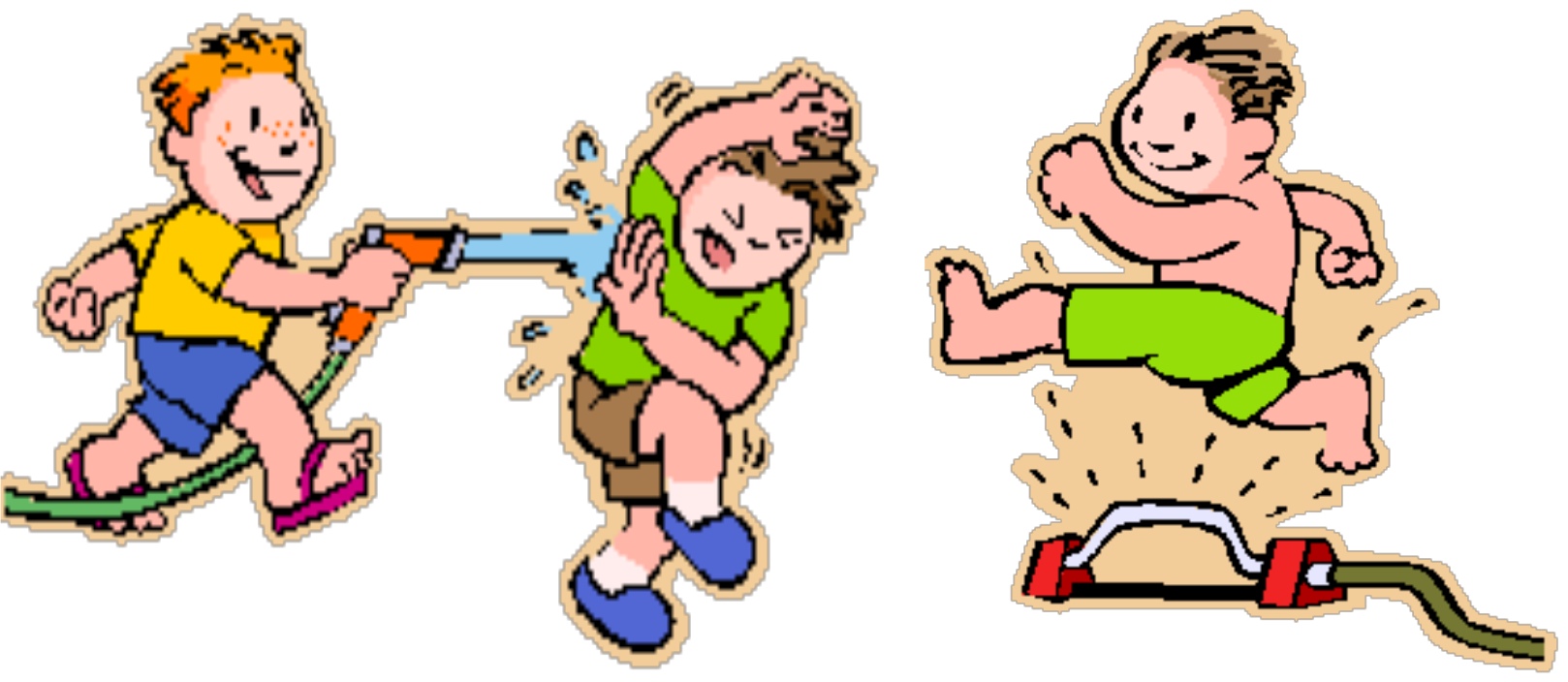
The SUN is out which makes it time for the water fights and games to begin.

It is August and for once, the weather is perfect, so why not set up water squirting games in the garden. The kids are waterproof and everything else will dry out, eventually!

How can water fights and games, where you can get wet, be handwriting and phonics homework?

You will be encouraging your child to develop their hand strength, co-ordination and eye tracking skills (all handwriting skills). However, these games are also fantastic for developing sound and word awareness skills.

Try mimicking the sounds that the water makes as it drips on to the floor or hits the targets; use directional language to support your child’s aiming skills; describe how the objects move when hit: bouncing, rolling or flying and talk through the emotions evoked through playing the games.

As well as supporting your child in developing a whole range of physical and language skills you will also increase your cool adult status.

Some fun water games:

  • Try setting up a target wall, using chalk to draw the targets.
    • How many of the targets can you hit with water squirted from a water pistol or squeeze bottle in a set time.
    • How many targets can be washed off.
  • Set up a skittles range.
    • Each skittle hit with water can be worth a certain number of points, or the distance of the skittles may affect their value.
    • A time trial game to hit all the skittles. If you are using plastic bottles as skittles try making some of them a little heavier by putting sand or dirt in them to make it a bit harder to knock them over.
  • Move the object race games.
    • A light toy/ball has to be moved by squirts of water over a distance.
    • A range of objects moved in to target areas to gain points.

The only limitation is you and your child’s imagination and trust me kids never tire of finding new ways to play with water (but then again neither do many adults)!

Homework has never been so much FUN!

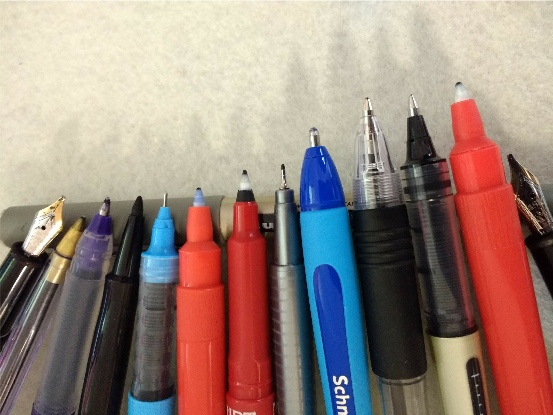
Choosing a Pen for Handwriting

Pen Types 2

Choosing and using the right pen can help to avoid smudging; make handwriting look smarter and prevent hand strain when writing for extended periods of time. Everyone is different, so the type of pen required is different too.

There are three main points to think about when choosing a pen for handwriting:

  1. The type of ink it uses.
  2. The size and weight of the pen.
  3. The type of point it has.

1. Types of ink used:

    • Oil-based ink
      • The ink is quick drying and so does not smudge easily
      • The ink flows smoothly depending on the point style of the pen
      • Ink can stop and start for no apparent reason
    • Water-based ink
      • The ink does not dry as quickly as oil-based ink so can smudge
      • The ink flows very smoothly

2. Pen sizes and weights

Because pens come in different shapes, sizes and weights it is important for your child to try out a range of pen styles to help them find the best fit for them. Remember one pen style does not suit all, everyone’s hand size and finger length are different.

Things to consider when choosing a pen:

  • Does it feel too short or too long?
  • Does it feel too thin or too thick?
  • Does it feel too heavy or too light?
  • Some children like a smooth round pen shape.
  • Some prefer a textured round pen shape.
  • While others may prefer a hexagon shaped pen.

3. Pen points

Pens come with different point or nib widths and shapes. The size and shape of the point gives different line thicknesses and are usually purchased as point sizes: extra fine, fine, medium or bold (some will have a measurement on as well).

  • A fine pen point produces thin lines and some children will find this can help to make writing neater.
  • A medium and bold point give thicker lines which many may find smoother to write with, though the letter size may be slightly larger because of it.

Once again it is important that children try out a range of pen point sizes to help them find the best fit for them.

Remember one pen point style does not suit all, everyone’s fine motor skills and writing pressures are different.

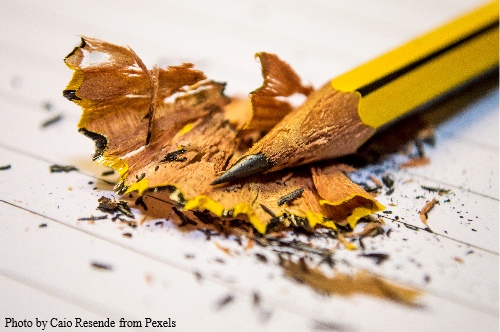
Pencil Power

pencil power 1

Why do we use pencils when we start to teach handwriting?

Modern classrooms use a range of technology, such as interactive white boards, so why are our children still using pencils when learning how to handwrite?

Pencils are a great first tool for learning to handwrite!

Why?

  • They come in different widths and lengths (to cater for the different gross and fine motor skills of the children).
  • Have different lead thickness and grades (soft to hard) of lead.
  • Provide varying degrees of resistance (depending on lead grade) which slows down the letter formation process enough for young children to have the control required to start to form their letters correctly. The greater the resistance the more the body can neurologically acknowledge (feel) the movement and help to send appropriate information to the brain.
  • As a child develops their handwriting skills to a more fluid handwriting style the pencil type can be easily changed.
  • Cheap and easily accessible.
  • A drawing medium which young children are already comfortable using.

Limitations:

  • Often a one size fits all approach to the pencil type, rather than tailoring to a child’s needs.
  • Difficulty in maintaining a good writing point, results in the child needing to use different levels of pressure, making handwriting hard work.
  • Over use of rubbing out mistakes (wastes time and develops a culture where making a mistake is seen as a failure). Making mistakes is how we learn, it is not failing!

Pencils are practical in school:

  • With pencil, children find it more difficult to write on one another and their clothes.
  • You do not have a whole class of children clicking pens (Velcro is bad enough).
  • Pen lids are not constantly lost or being swallowed.
  • Pencils seem less of a problem when stuck in ears or up the nose.
  • They are cheap.
  • Pencils do not explode, leaving a mess all over the room and any child that happened to be in the room at the time.
  • Time not wasted by trying to suck the ink up out of the pen.

Handwriting is a complicated skill to learn and having the right tools for the job always helps. It is worth spending a little time with children using a range of pencil styles and lead grades to find ones that they find comfortable to use for handwriting. These will be different from those they use for drawing. As their handwriting skills develop so the type and grade of pencil they begin to favour will change.

Paper Position & Tilt are Important for Good Handwriting

paper position 1

The correct paper position and tilt enables your child to handwrite comfortably while being able to see what they are writing. It also allows the non-writing hand to move the paper up the table so that the writing hand elbow can stay in the same position. The aim is to have the paper move up the table, rather than the writing hand moving down and eventually off the table.

As a class teacher I noticed that by the time children were about 8 or 9 years old it was very difficult to encourage them to move the paper up the table as they wrote. They would very often move their writing hand down the table, keeping the paper still, struggling to write properly as their hand hung over the edge of the table. Bad habits start early and can be difficult to change; good paper position and paper movement training at an early age can make such a difference to a child’s handwriting ability.

So why is paper position and tilt often ignored when teaching handwriting?

Maybe it is because experts disagree on what is the most appropriate paper tilt for right and left-handed writers. As there is no clear guidance people become uncomfortable about giving advice and so brush over the value of angling the paper for handwriting.

The most appropriate paper tilt angle is generally suggested as anywhere between 20 to 45 degrees anti-clockwise for right-handed writers and 30 to 45 degrees clockwise for left-handed writers.

For more tips and advice on developing a good paper tilt angle checkout this section of our website: http://bit.ly/2QSssWQ