The paper position and tilt on the desk, for both right and left-handed writers, can make a big difference to a child’s handwriting experience and comfort and yet it is an element which is often neglected.
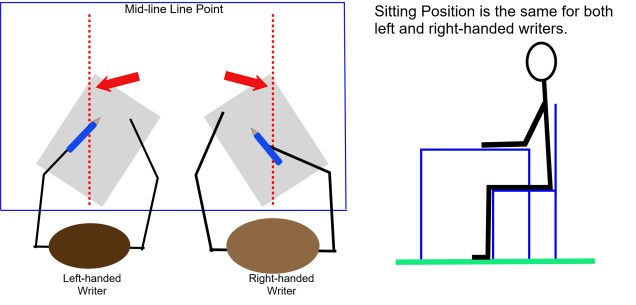
The correct paper position and tilt enables your child to handwrite comfortably while being able to see what they are writing. It also allows the non-writing hand to move the paper up the table so that the writing hand elbow can stay in the same position. The aim is to have the paper move up the table, rather than the writing hand moving down and eventually off the table.
With the non-writing hand moving the paper up the table the writing line stays in the same place which means eye movements are less, helping to make the writing experience less tiring and stressful.
If the paper is positioned and tilted correctly, with their writing hand under the writing line, they will also be able to see more easily what they have just written and where to place the next letter, word or section of text on the page. This is especially important for left-handed writers.
The most appropriate paper tilt angle is generally suggested as anywhere between 20 to 45 degrees anti-clockwise for right-handed writers and 30 to 45 degrees clockwise for left-handed writers.
For more tips and advice on developing a good paper position and tilt:
For Parents: https://teachhandwriting.co.uk/paper-position.html
For Teachers: https://teachhandwriting.co.uk/paper-position-for-comfortable-handwriting.html
 teachhandwriting.blog