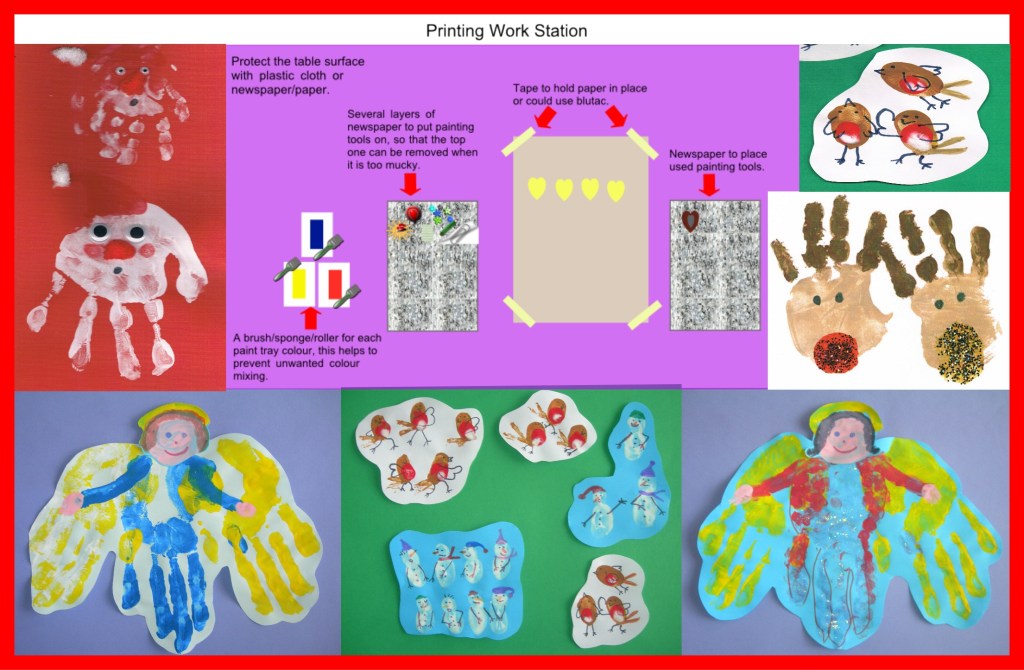
#Christmas Finger Printing a Fun Way to Support Handwriting

Hand and finger printing can be a fun way of getting your child used to touching and using different textured mediums. The creative element can help some children to cope with, and learn to overcome, some sensory tactile defence difficulties. Being happy holding objects allows them to hold a pencil comfortably, leading to better handwriting.

Handwriting requires a child to apply the right amount of pressure to get the pencil marks of the letters on to the page. Too little pressure and the writing is often faint and wriggly in appearance (like a spider has walked across the page). Too heavy and the marks are very dark and can tear the paper; often the writing looks big, angular and laboured. Not being able to apply the correct pressure also affects how a child holds the pencil, which can cause the hand and fingers to tire more quickly, making writing tasks challenging.

Printing activities help your child to start to become aware of how to control the amount of pressure they use and the effect that this has on the quality of the work produced. Learning to control the amount of pressure exerted and how it feels can be very difficult for some children and it takes time and a range of experiences to develop these skills.

There are some fabulous printing ideas out on the internet; one of my favourite art resources is The Usborne Art Idea Books. Hand and finger printing can create some amazing artwork which can be used to make wonderful personalised Christmas cards, tags and paper.

Who could not be charmed by these fun thumb and fingertip snowmen or robins or delighted by a hand print angel?

For other useful tips on printing and setting up a printing work station, check out our ‘More fun handwriting activities’ in our Parents section under Learning Through Play: https://teachhandwriting.co.uk/more-activities.html

Tips for Supporting #Left-handed Writers

Surprisingly there are few differences when teaching left and right-handed children to handwrite. A left-handed child needs a slightly different pencil grip, and needs to hold the pencil slightly higher up the shaft, as well as a different paper position and tilt. Some left-handed children do find handwriting challenging to start with because they naturally want to draw straight lines right to left rather than left to right.

Check out our Left-handed Writers Page for more information and tips on how to support them: https://teachhandwriting.co.uk/left-handed.html

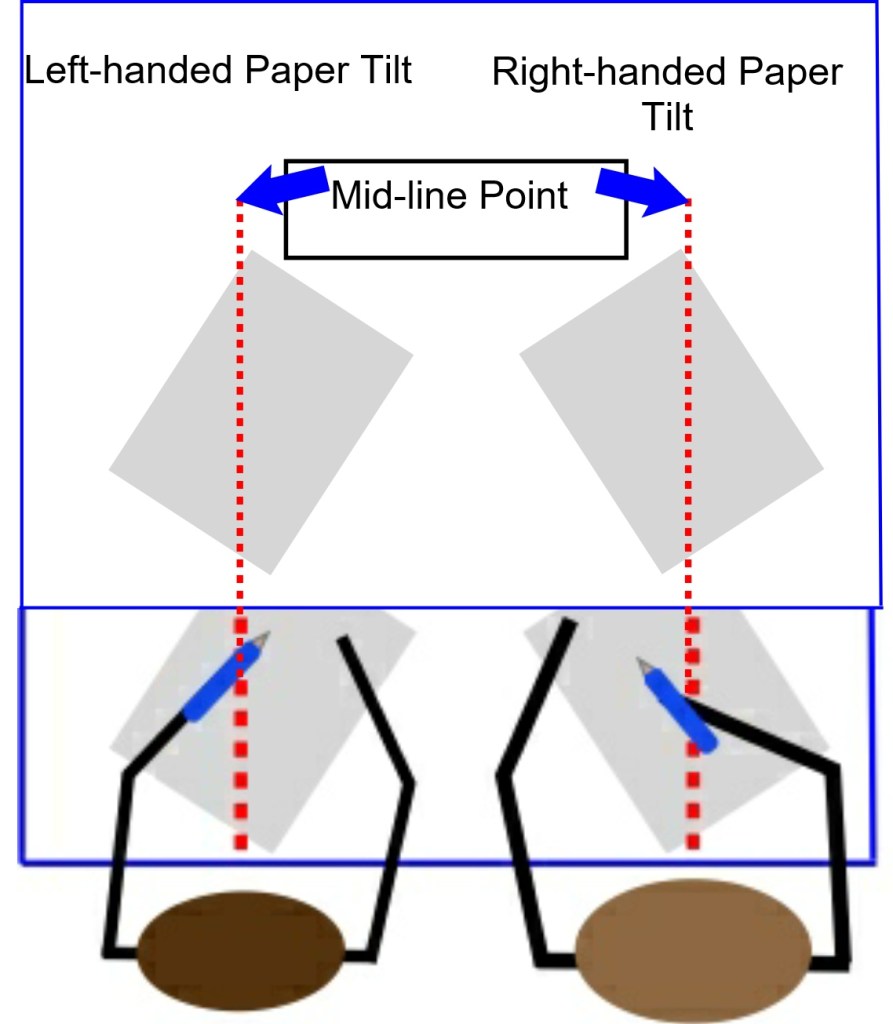
Paper Position & Tilt are Important for Good Handwriting

The paper position and tilt on the desk, for both right and left-handed writers, can make a big difference to a child’s handwriting experience and comfort and yet it is an element which is often neglected.

The correct paper position and tilt enables your child to handwrite comfortably while being able to see what they are writing. It also allows the non-writing hand to move the paper up the table so that the writing hand elbow can stay in the same position. The aim is to have the paper move up the table, rather than the writing hand moving down and eventually off the table.

With the non-writing hand moving the paper up the table the writing line stays in the same place which means eye movements are less, helping to make the writing experience less tiring and stressful.

If the paper is positioned and tilted correctly, with their writing hand under the writing line, they will also be able to see more easily what they have just written and where to place the next letter, word or section of text on the page. This is especially important for left-handed writers.

The most appropriate paper tilt angle is generally suggested as anywhere between 20 to 45 degrees anti-clockwise for right-handed writers and 30 to 45 degrees clockwise for left-handed writers.

For more tips and advice on developing a good paper position and tilt:

For Parents: https://teachhandwriting.co.uk/paper-position.html

For Teachers: https://teachhandwriting.co.uk/paper-position-for-comfortable-handwriting.html