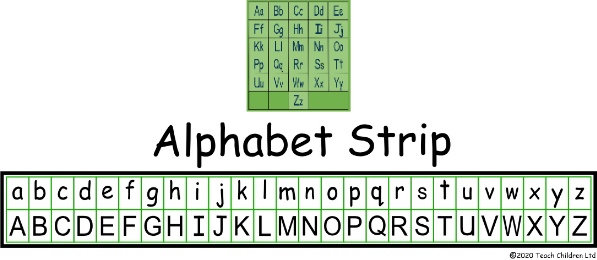
Here at Teach Children we have always promoted the importance and power of teaching the correct letter names to begin with; through our Teach Handwriting website, Schemes and Teach Phonics website.
Unfortunately, over the years this has proved to be a challenge as schools have felt they needed to focus more on phonics skills and relied on the handwriting element that were incorporated within the phonics schemes, which frankly just didn’t work for so many.
The Department of Education published on 08/07/2025 its new writing framework, which now recognizes and clearly emphasises the importance of teaching handwriting from EYFS right through the primary years.
Their acknowledgement that handwriting has to be taught separately from phonics means that children will have to learn the letter names as part of a good handwriting scheme:
“Pupils should be taught both phonics and handwriting consistently and systematically, in line with the programme for each.”
Department of Education; The writing framework: July 2025; page 37; https://www.gov.uk/government/publications/the-writing-framework
In learning to handwrite, a letter is a shape which only represents a sound when it is placed within a word or sentence (has a context). Also, a letter or combination of letters can represent more than one sound and so the only unique way of identifying alphabet letters when we talk about them is to use their names.
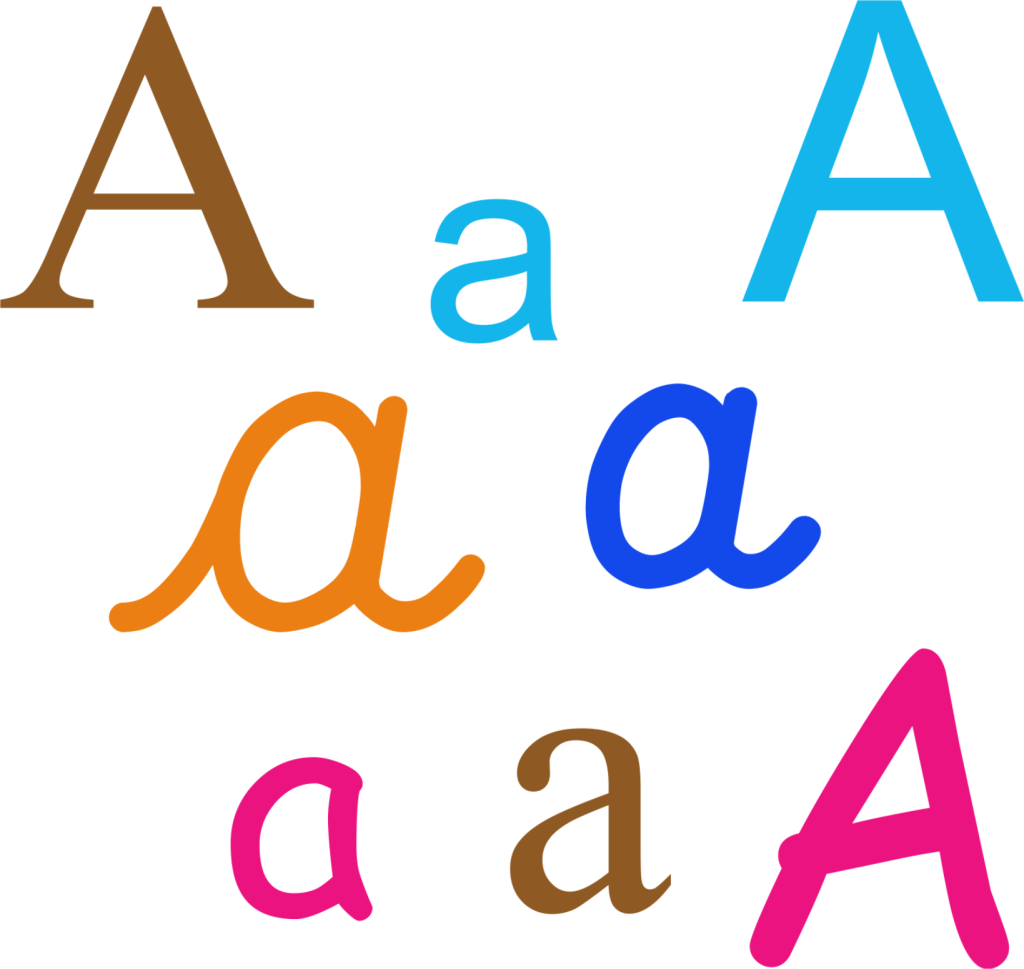
Learning the correct letter names helps to reinforce that when talking about the letter ‘a’ (ay) for example it has a set shape regardless of the sound that it will be representing in the word. This further supports children’s handwriting development as the communication of your requirements is unambiguous.
Teaching the correct letter names is important when supporting handwriting as this can in turn affect a child’s phonics understanding later on. For example, it can seem very easy when explaining to a child which letter to write when they ask which one is making a ‘kuh’ sound in a word such as cat to say a ‘curly kuh’. There is no such letter in the alphabet called ‘curly kuh’ it is the letter ‘c’ (cee). By adding the ‘kuh’ sound to the letter it reinforces incorrect phonics knowledge. The letter ‘c’ does not make a ‘kuh’ sound in words such as: city, circle, cycle and centre.
It should also be pointed out that learning the unique letter names of the alphabet is a pre-phonics skill; as well as an early years learning goal.
Phonics is a powerful decoding and encoding tool. However, so is the alphabet letter naming system. Both need to work side by side to support our children, especially in those early years of their educational journey.
The English phonic system is very complex but this is why our language is so rich. Young children need to use letter names as an additional tool, as it takes many years for them to be introduced to the more complex phonics coding system.

 teachhandwriting.blog