
Here at Teach Handwriting we have been working hard on updating our website, making it more accessible for parents. Can’t wait to share it with you all!
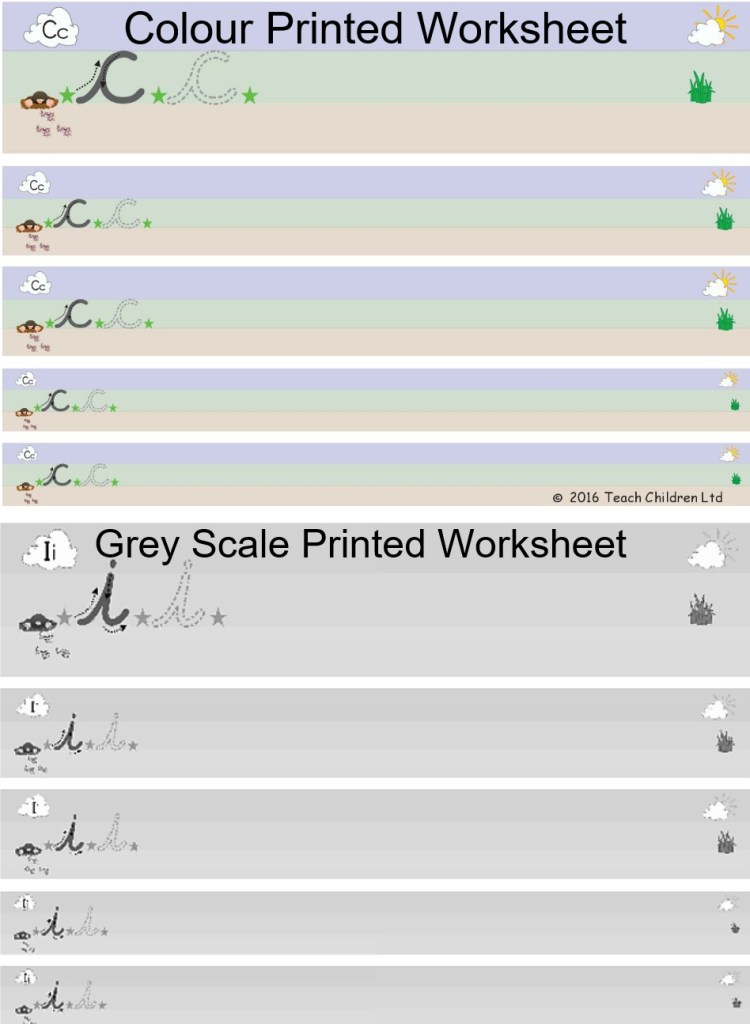
At Teach Handwriting our aim is to move children off of worksheets as soon as possible. To achieve this, it is important to encourage them to transfer their skills to plain or lined paper whichever is most appropriate to their ability level. We realise that it is not always possible to buy paper with the appropriate line height in all cases, so would recommend creating your own on the computer.
Use a combination of worksheets and lined paper in each handwriting session with your child:
Hopefully the worksheet will last over a couple of handwriting sessions and you and the child will see an improvement over the time. The sooner they learn to transfer their skills to paper the better.
We realise that printing off our worksheets and coloured lined paper can become costly so, to help reduce the costs:

Choosing and using the right pen can help to avoid smudging; make handwriting look smarter and prevent hand strain when writing for extended periods of time. Everyone is different, so the type of pen required is different too.
There are three main points to think about when choosing a pen for handwriting:
1. Types of ink used:
2. Pen sizes and weights
Because pens come in different shapes, sizes and weights it is important for your child to try out a range of pen styles to help them find the best fit for them. Remember one pen style does not suit all, everyone’s hand size and finger length are different.
Things to consider when choosing a pen:
3. Pen points
Pens come with different point or nib widths and shapes. The size and shape of the point gives different line thicknesses and are usually purchased as point sizes: extra fine, fine, medium or bold (some will have a measurement on as well).
A fine pen point produces thin lines and some children will find this can help to make writing neater.
A medium and bold point give thicker lines which many may find smoother to write with, though the letter size may be slightly larger because of it.
Once again it is important that children try out a range of pen point sizes to help them find the best fit for them.
Remember one pen point style does not suit all, everyone’s fine motor skills and writing pressures are different.

Last week we looked at why pencils, rather than pens, are a good first tool for learning to handwrite.
Children can’t wait however for that magic day when the teacher moves them from pencil to pen. It really is a big moment and means more than just “I can write neatly”, for them it is an acknowledgement of their maturity (growing up) and a status symbol of intellect and ability in their eyes and those of their peers.
Moving from pencil to pen can have a dramatic effect on a child’s confidence and self-esteem. I have seen how moving a child from pencil to pen can give them a new found confidence and self-belief in their own ability, because I showed my belief in them by making that gesture. They may not have had the perfect font style in pencil but moving to pen did improve their ability to form letters more freely and become more consistent in their formation.
It is difficult to put an age on when a child should move from pencil to pen because every child is different. Schools have different policies on when this should happen, with most tending to make the move at around the age of 8/9 years old. It should really depend on the child’s ability rather than their age, as well as the potential benefits the move may have to confidence and self-esteem.
It does not make sense to keep a child working with pencil until they have a perfect handwriting style because that may never happen. For many a neat, beautiful handwriting style may never be a reality.
Advantages of pens:
Limitations:
My tip would be to test a few pen types and weights to find out which ones your child finds the most comfortable and enjoyable to use. I realise this can be an issue if your child’s school insist on one type of pen. But if you can prove your child’s handwriting ability is great with a different style, I think it is worth talking to them about it.
Moving from pencil to pen is an important point in a child’s education, affecting their confidence and self-esteem, and like any transition stage it should be approached with thought and care.
Why do we use pencils when we start to teach handwriting?
Modern classrooms use a range of technology, such as interactive white boards, so why are our children still using pencils when learning how to handwrite?
Pencils are a great first tool for learning to handwrite!
Why?
Limitations:
Pencils are practical in school:
Handwriting is a complicated skill to learn and having the right tools for the job always helps. It is worth spending a little time with children using a range of pencil styles and lead grades to find ones that they find comfortable to use for handwriting. These will be different from those they use for drawing. As their handwriting skills develop so the type and grade of pencil they begin to favour will change.

There are a number of possible reasons why a child may reluctant to write or have a poor writing speed. Over the last seven weeks we have looked at a number of these:
Other key areas to look at we have also cover are:
Tips for a Child who Actively Avoids, or is Reluctant, to do Writing or Drawing Activities
How to Organise a Playtime Drawing/Writing Session
Tips on Running the Session
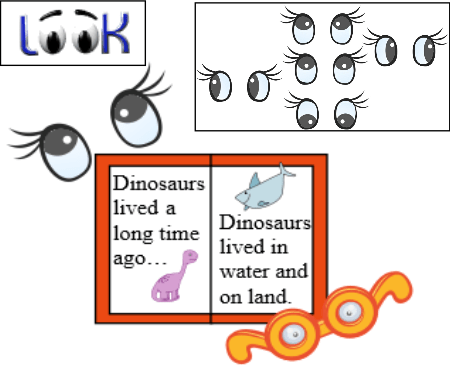
Eye tracking and/or spatial awareness difficulties can have a dramatic effect on a child’s handwriting ability. Weak skills in these key areas make it difficult for children to form letters correctly (curves and lines often not joining to complete the letter shape), as well as being unable to appropriately space letters in words and words in sentences. Other poor presentation skills include being unable to write on lines and often missing lines out when following on with a sentence.
It is also worth pointing out that a child with poor eye tracking and/or spatial awareness skills will also find reading difficult.
For more information on how to identify eye tracking and spatial awareness difficulties as well as activities to help support and develop these skills use these links:

Motor memory and visual memory difficulties can have a dramatic effect on a child’s handwriting ability. Possible signs of poor motor memory or visual memory skills can be that their handwriting is slow and deliberate or fast and messy (as they try to hide their letter formation issues), making it difficult to read. They can spend so much time on trying to remember how to form the letters, they have no working memory space left for the important tasks of composing their writing and spelling.
Poor motor memory skills can make handwriting difficult as shapes and letter formation movements are often forgotten, causing letter reversals and incorrectly formed letter shapes, which can make joining a very slow process to learn. A poor and often slow handwriting style can develop as font styles are mixed and capital letters are used inappropriately. Combined, these difficulties can cause poor presentation, spelling and legibility issues.
Poor visual memory skills make handwriting difficult as the ability to recall how letters look and reproduce them with appropriate spacing and positioning is partially or completely lost. This leads to poor letter formation skills, letter reversal along with spelling and presentation difficulties.
Visual memory and motor memory skills are linked and so a game or activity that supports one is likely to support the other.
For more information on how to identify motor memory and visual memory difficulties see our Other Physical Skills Assessment: http://bit.ly/2P5jS44
For games and activities to help support and develop these skills use this links: http://bit.ly/2M350S1
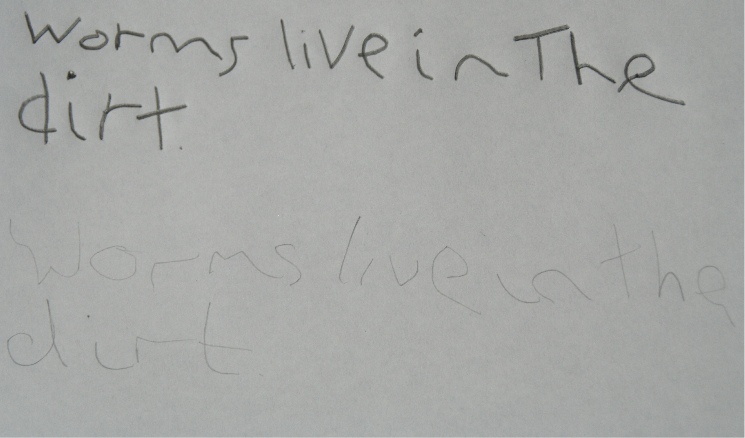
Some children may hold a pencil correctly but struggle to maintain and control the pressure required to handwrite.
Here are some additional tips to help support a child who is pressing down too hard with their pencil:
Focused games and activities can help develop both the physical strength and sensory perception areas.
Here are some additional tips to help support a child who is Not pressing down hard enough with their pencil:
Focused games and activities can help develop the physical strength and sensory perception areas.
 teachhandwriting.blog