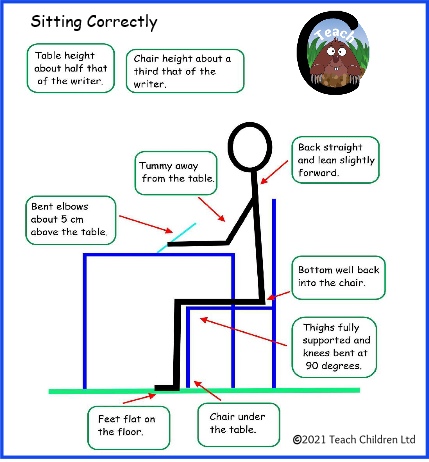
Learning to sit correctly at a table for handwriting type activities is not just important for developing a physically comfortable and maintainable sitting position; it also allows the arms and hands to move freely and enables the paper to be tilted and positioned correctly, helping to improve the quality of the handwriting.
Learning how to sit correctly, so that it becomes second nature, needs training and takes time. Many children do not sit correctly at a desk, when they are asked to do so, because they have not been taught or do not understand what they are meant to do.
For tips and ideas on how to help a child develop a good sitting posture and position for handwriting check out our ‘Sitting’ section on the website: https://www.teachhandwriting.co.uk/handwriting-sitting-position-desk.html
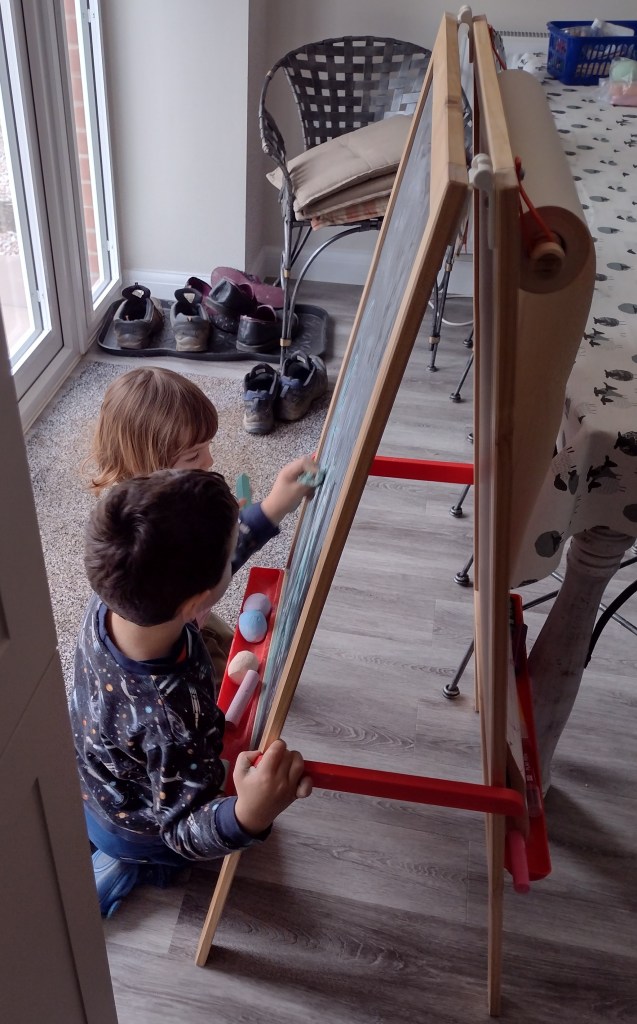
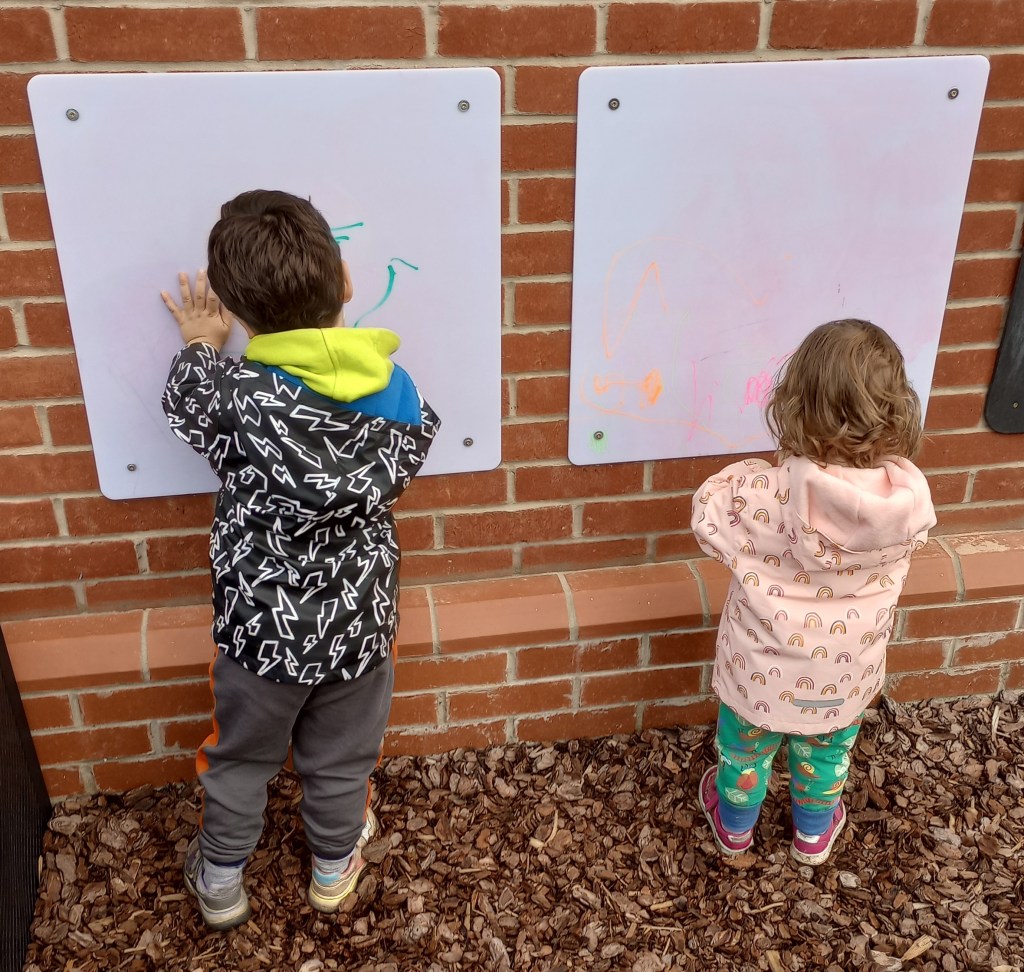
Some children find sitting correctly at a desk difficult because they have not acquired all the gross motor skills needed to sit correctly for long periods of time. These children may require additional posture base and bilateral coordination games and activities to help them build the appropriate gross motor skills.
For more information on developing a child’s core strengths check out the Key Strengths section of our website: https://teachhandwriting.co.uk/handwriting-motor-skills.html
 teachhandwriting.blog